
From the Hamada Desert to The Common|Wealth: How Values-Based Partnerships Harvest Global Regeneration on Chicago’s South Side
At Sweet Water Foundation (SWF), growth is never an isolated event. It is a continuous practice of Regenerative Neighborhood Development (RND), a living praxis rooted in intentional connections, shared values, and the radical act of cultivating land, community, and a new humanity.
True transformation relies on the alchemy of intentionally cultivated relationships grounded in collective action. When organizations and individuals align around a shared commitment to praxis, justice, and human dignity, global networks cease to be abstract concepts—they become living, breathing ecosystems of support. This story demonstrates what happens when we push to bring meaning and purpose to connections and cultivate them with deep intention: how a seemingly one-off keynote speech blossomed into an international residency, how an unexpected disruption turned into a community celebration, and how sharing RND illuminates endless possibilities for localized global action.
Seeds Planted | A Values-Based Connection Across Oceans
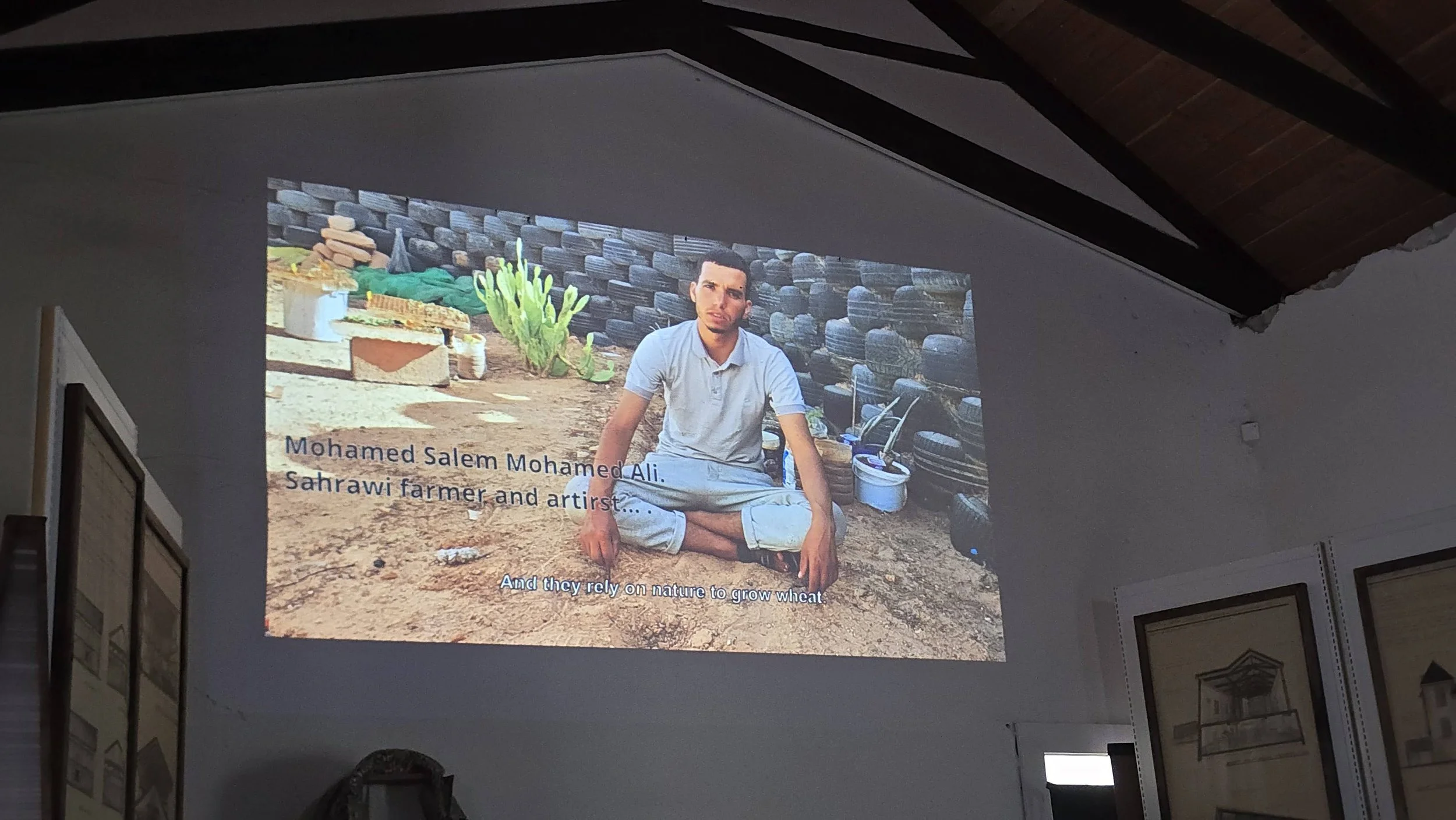
The journey began years earlier through an ecosystem of aligned values. In 2020, SWF Executive Director Emmanuel Pratt spoke at The World Around Summit, initiating an ongoing relationship with Beatrice Galilee built on a shared commitment to climate justice and design, and community-led resilience. Emmanuel later served on the advisory board for The World Around’s Young Climate Prize, where he first encountered the work of Sahrawi artist, farmer, and environmental practitioner Mohamed Salem Mohamed Ali.
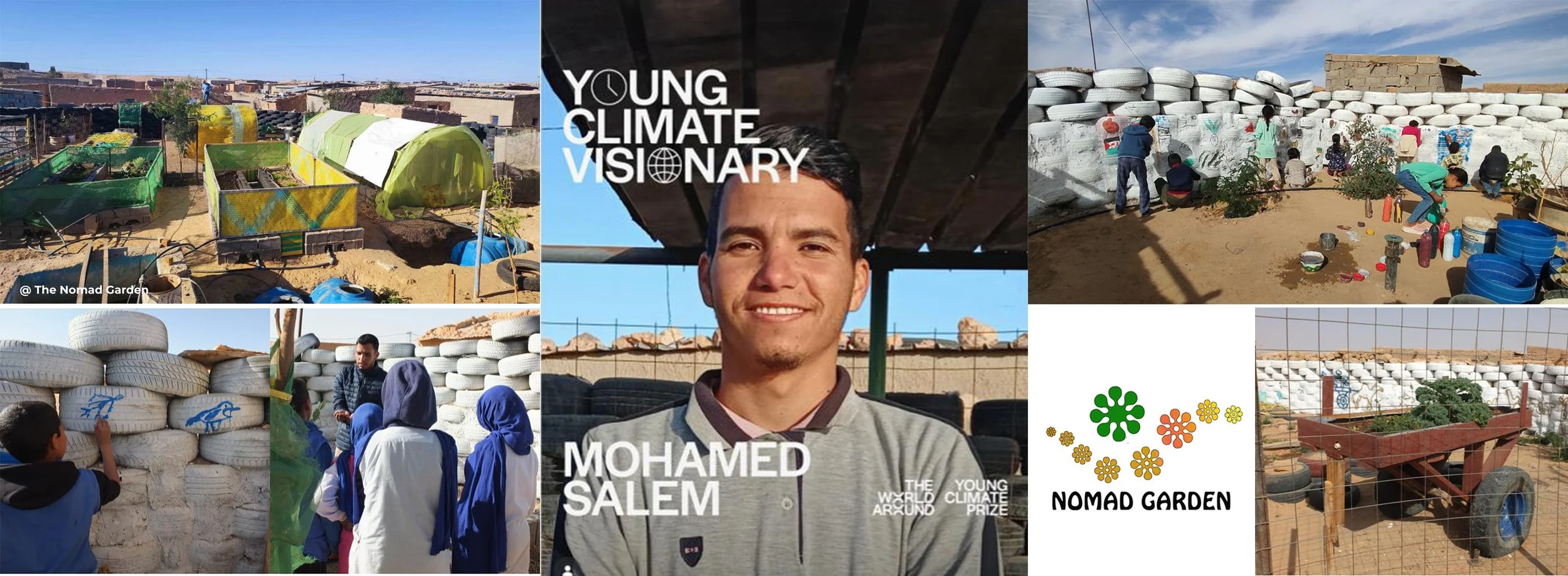
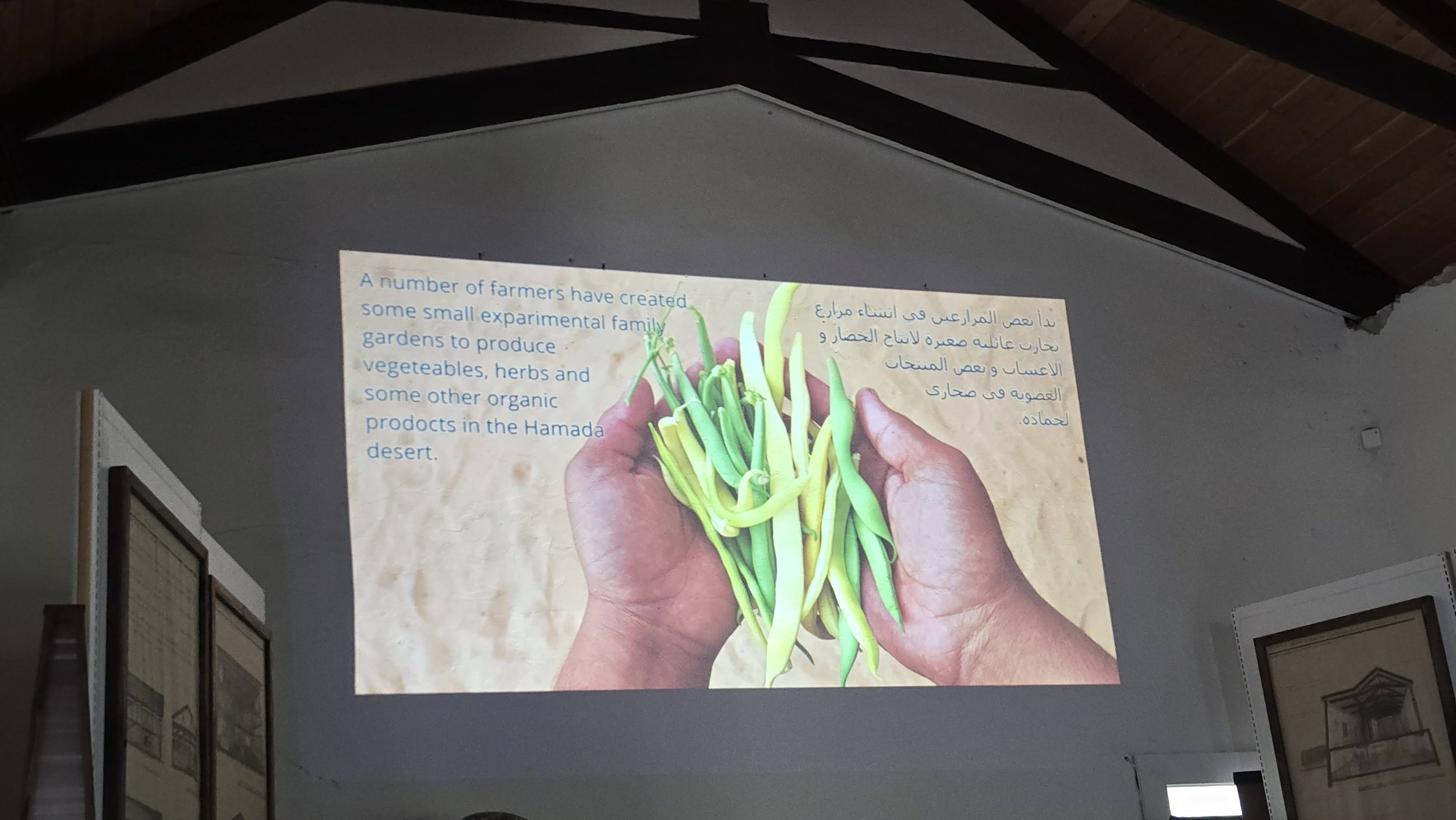
In Algeria’s Smara refugee camp, at just 17 years old, Mohamed Salem began cultivating resilience in one of the most inhospitable environments on earth. Forced to navigate extreme desert conditions, rising global temperatures, and dwindling international aid, Mohamed created The Nomad Garden—a small experimental garden exploring ways to grow organic food locally and sustainably. By maximizing “every plant, every animal, and every system,” Mohamed Salem seeks to “show that even in one of the harshest environments on Earth, it is possible to grow food, care for the land, and become a little more self-reliant.” Blending art and survival, The Nomad Garden functions as a living sculpture in the desert, using innovative methods such as sandponics, hydroponics, greenhouses, and water filtration. Mohamed grows organic produce and raises livestock where conventional agriculture is nearly impossible.
Recognizing a profound alignment between Mohamed’s desert experimentation and SWF’s RND praxis, SWF and The World Around saw an opportunity for mentorship, knowledge exchange, and collaborative support. What began as an inspiring connection across generations and geographies quickly evolved into a concrete invitation: SWF welcomed Mohamed to join its 2026 Winter RND Research Internship cohort, setting the stage for an extended Sweet Water Human-in-Residence Immersion at The Common|Wealth.
Spring 2026 RND Re-Search Internship | Building the Bridge
The semester-long Regenerative Neighborhood Development (RND) Re-search Internship uses SWF’s Communiversity Campus at The Common|Wealth to unpack the history and present-day realities of disinvested communities. Since 2016, SWF has hosted more than 60 scholars and practitioners globally—spanning Chicago to New York, India, Nigeria, and Morocco—across fields like Art, Architecture, Public Health, and Urban Planning. Interns integrate into the SWF team and connect with SWF’s Values-Based Partners, such as the James and Grace Lee Boggs Center and Sankofa Village Projects, to produce research and design projects that build on SWF's daily praxis.
In February 2026, Mohamed Salem joined the Spring 2026 RND Re-Search cohort, connecting with participants from Los Angeles, Philadelphia, and Chicago's South Side. Meeting weekly online (with local interns joining on-site), the group bridged geographic divides and digital dialogue with hands-on practice by growing something in their own living spaces.
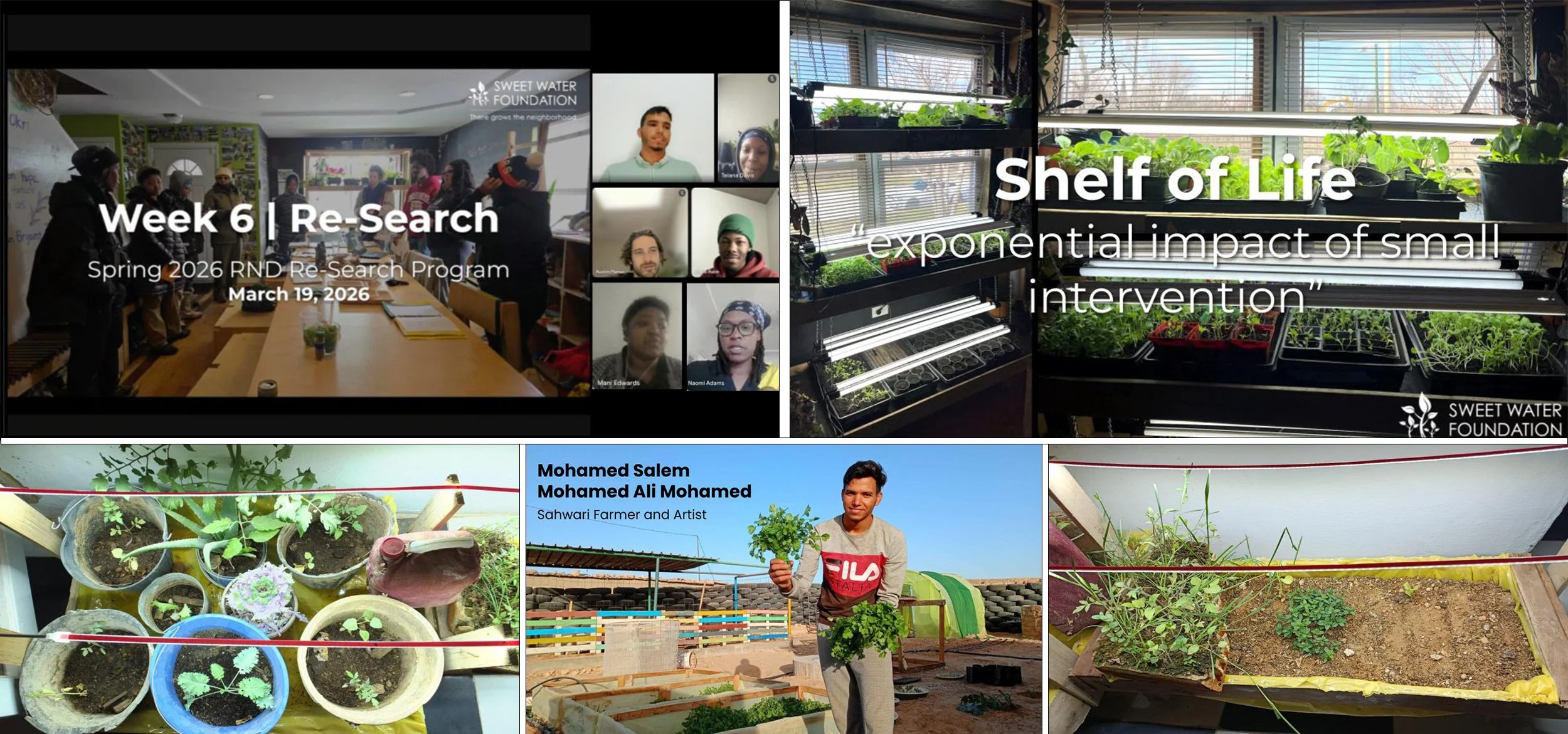
A central focus of the internship was exploring SWF’s Shelf of Life—examining how a simple, well-designed shelf can cultivate plants that nourish an entire community. The internship culminated in final presentations where interns shared their home-growing experiments. For Mohamed Salem, this meant building his own desert adaptation of the Shelf of Life inside his home in the Smara refugee camp: a tiny indoor garden testing mint, kale, lettuce, aloe vera, and tomatoes away from the harsh heat outside. His experiment not only brought his family closer to the plants, but inspired visiting neighbors and relatives to reimagine living green art on their own walls.
Mohamed Salem’s final presentation bridged the Sahrawi context with SWF's global cohort—offering a vital international perspective—and became the foundational launchpad for his presentation at the 2026 The World Around Summit in May. By weaving his desert innovation into SWF's urban praxis, the internship laid the relational groundwork, shared vocabulary, and creative momentum for his Sweet Water Human-in-Residence Immersion long before he ever set foot in Chicago.
Serendipity in Motion | SWF Hosts the World Water Film Festival
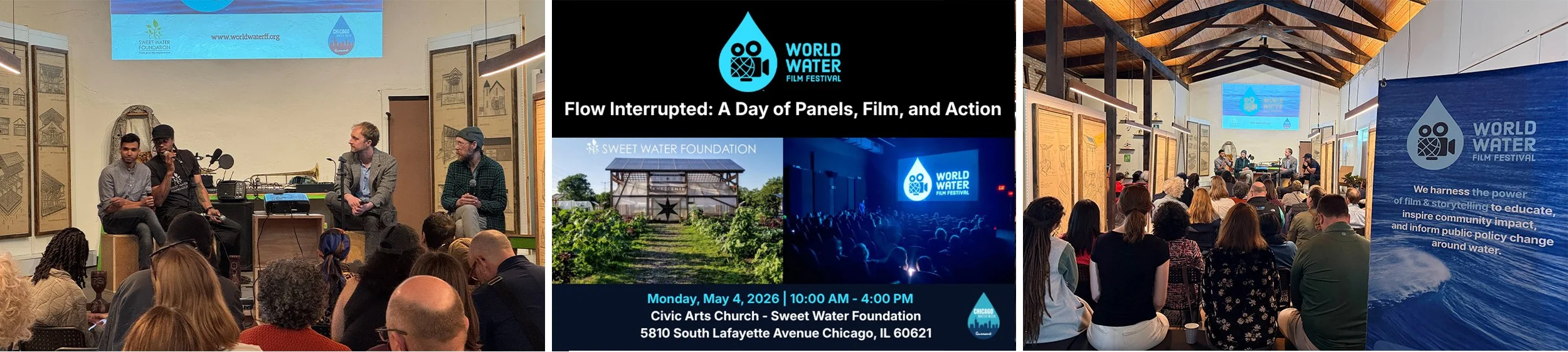
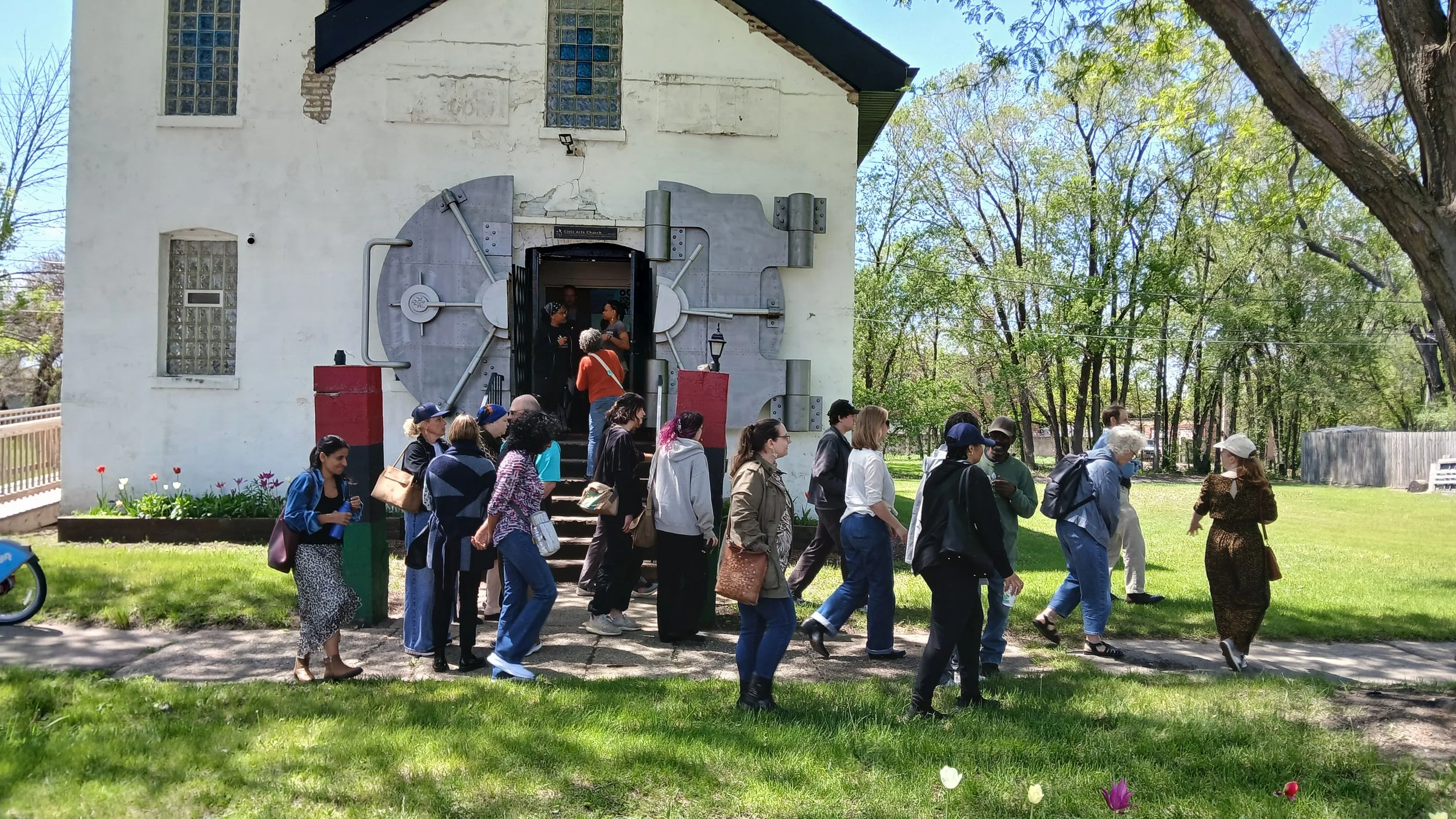
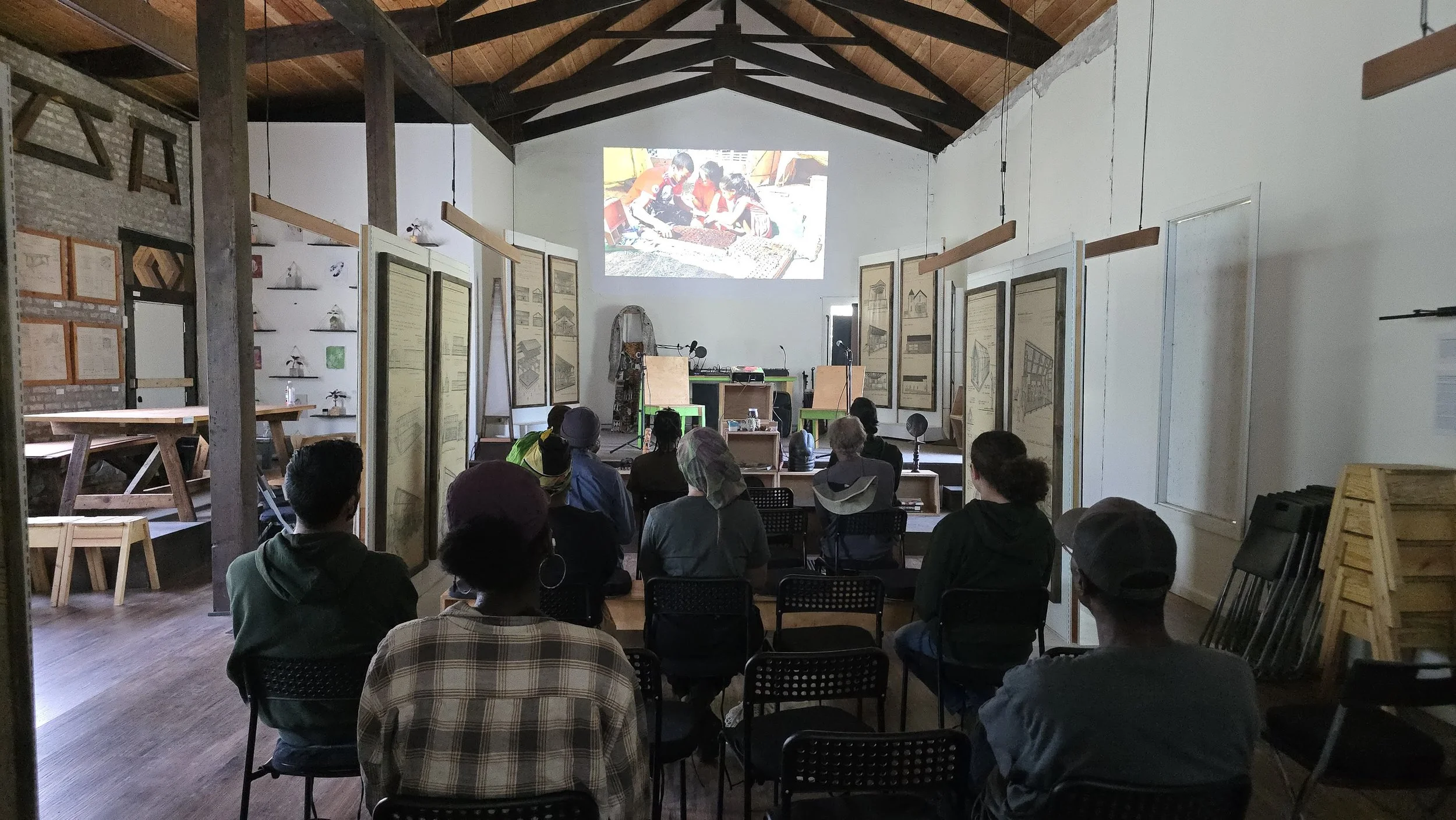
Before his formal residency was set to begin, Mohamed was scheduled to visit Chicago during the 2026 Chicago Water Week to screen his documentary short, A Garden in the Desert, as part of "Go with the Flow: Where the Water Grows"—a featured event produced by the World Water Film Festival (WWFF). However, just days before the scheduled program, the original venue unexpectedly canceled. Sweet Water Foundation stepped in to transform this potential setback into a fortuitous, welcoming moment. SWF opened the doors of the Civic Arts Church to host the event on Monday, May 4. What could have been a logistical crisis became an expansive day of film, dialogue, and community connection, introducing Mohamed Salem to the Sweet Water flows ahead of schedule.
The event brought together an extraordinary convergence of global and local water advocates, centering stories of Indigenous Ecological Knowledge and community restoration. The curated screening lineup delivered powerful global perspectives directly to the South Side. Highlights included Mohamed’s own A Garden in the Desert, which explores desert agricultural traditions and water conservation, screened alongside international short films such as Dji Mansa ("Water Masters"), The Hōteo Sediment Reduction Project, and Plantando Raíces en Lago Uru Uru. The film festival also featured UN Water’s Groundwater Explained: PFAS animation, regional films like Stella, Wisconsin, experimental 16mm art like Good Neighbors Care, and the award-winning feature How to Poison a Planet starring Mark Ruffalo.
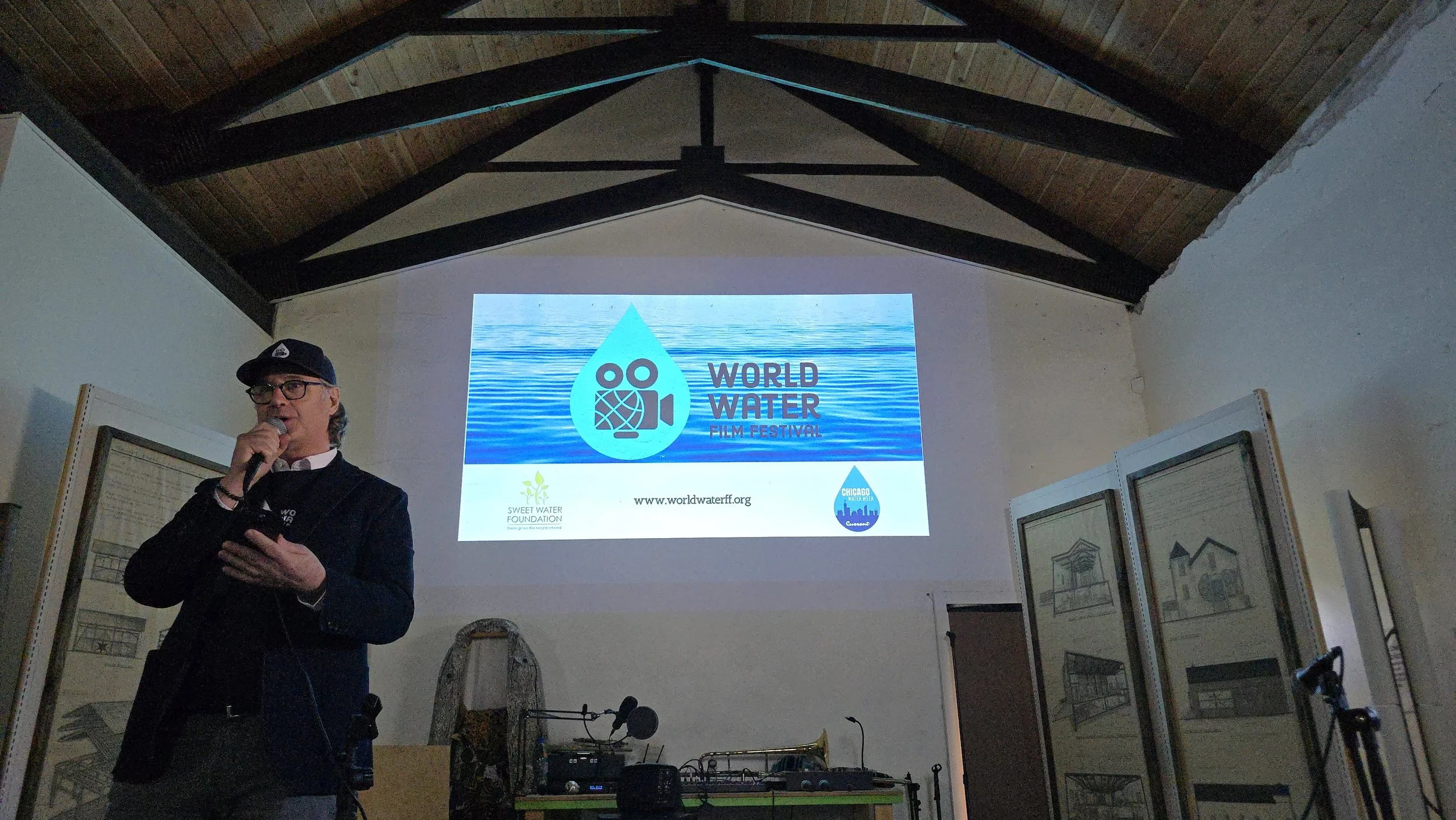
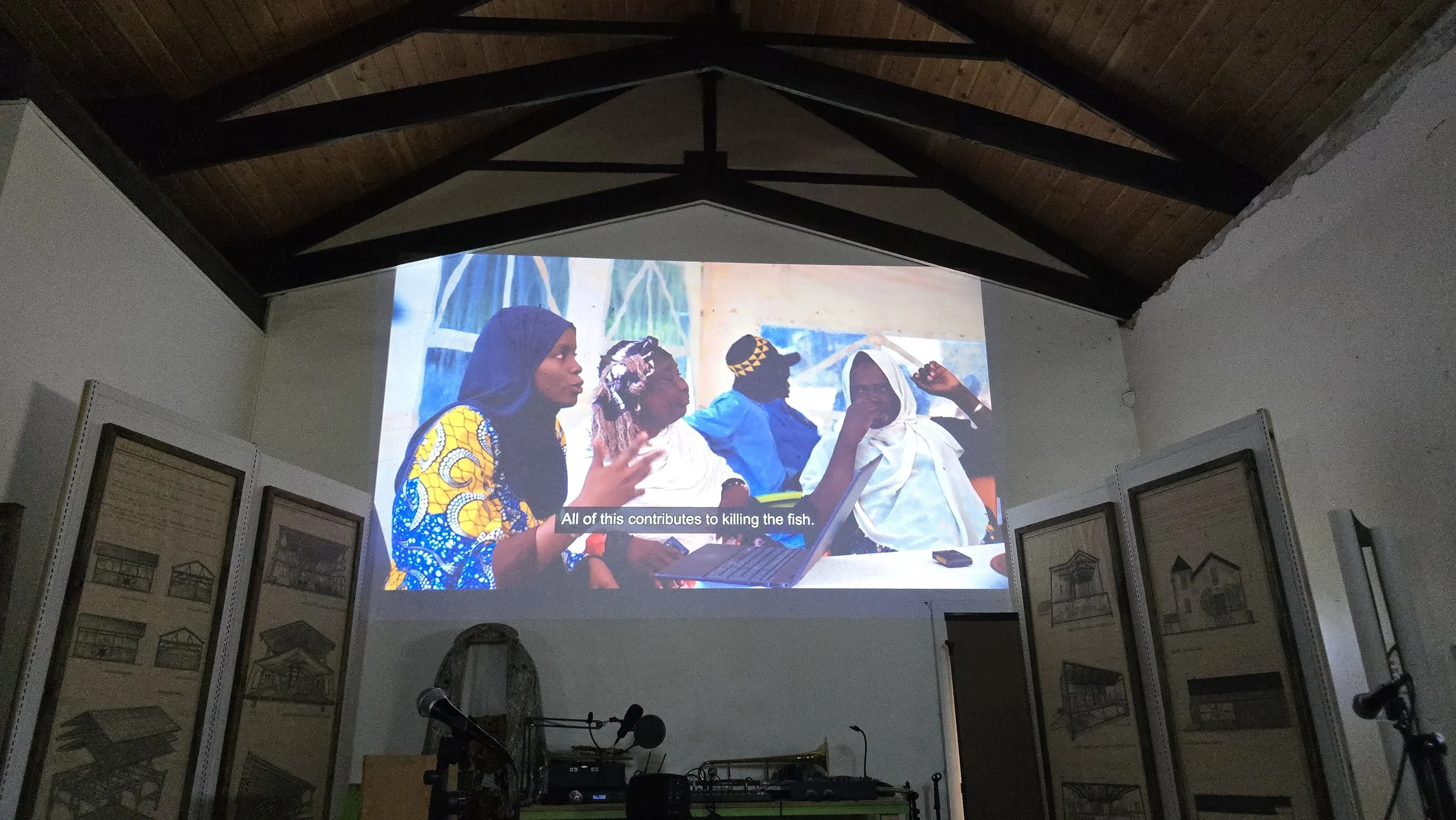
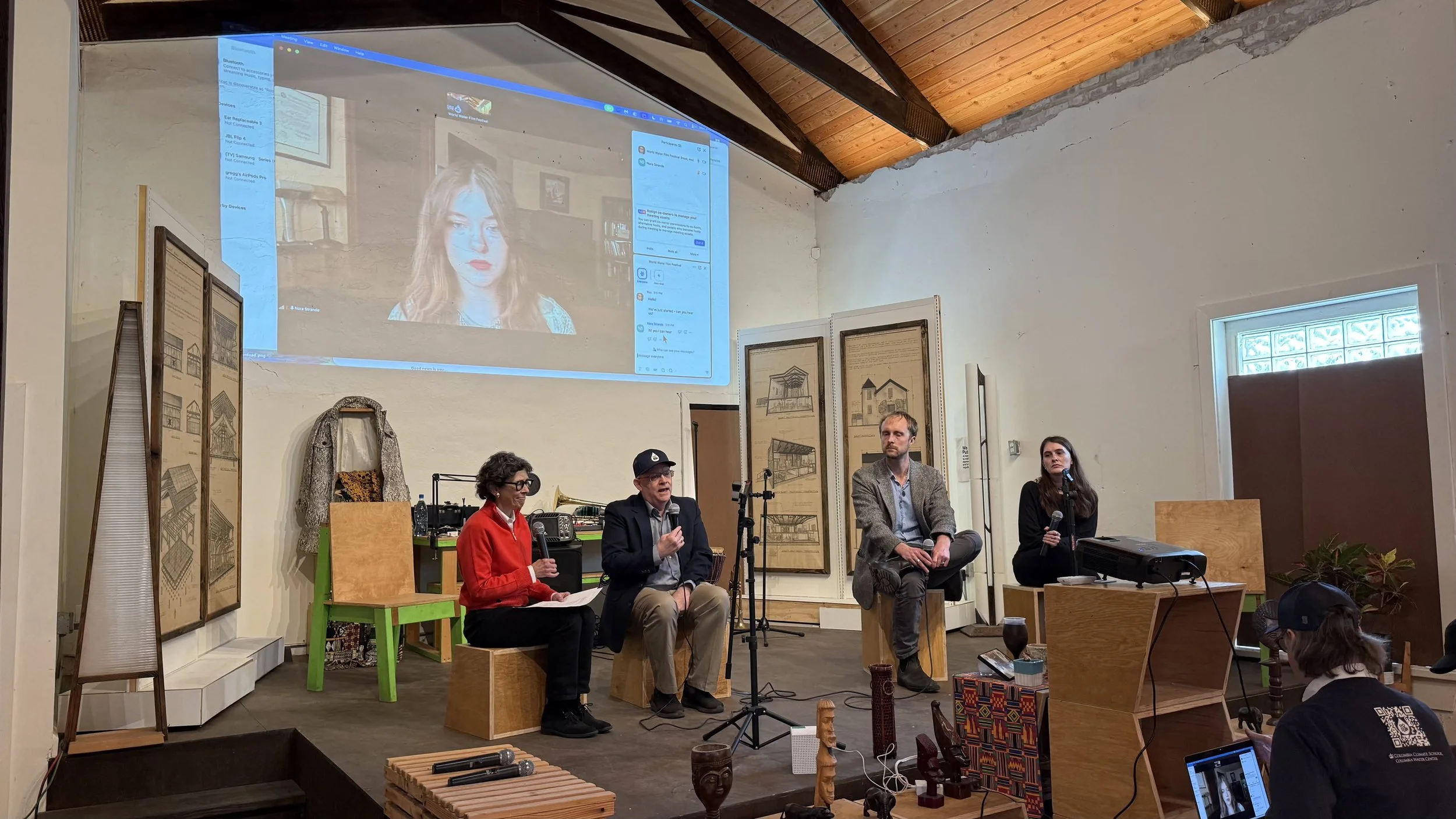
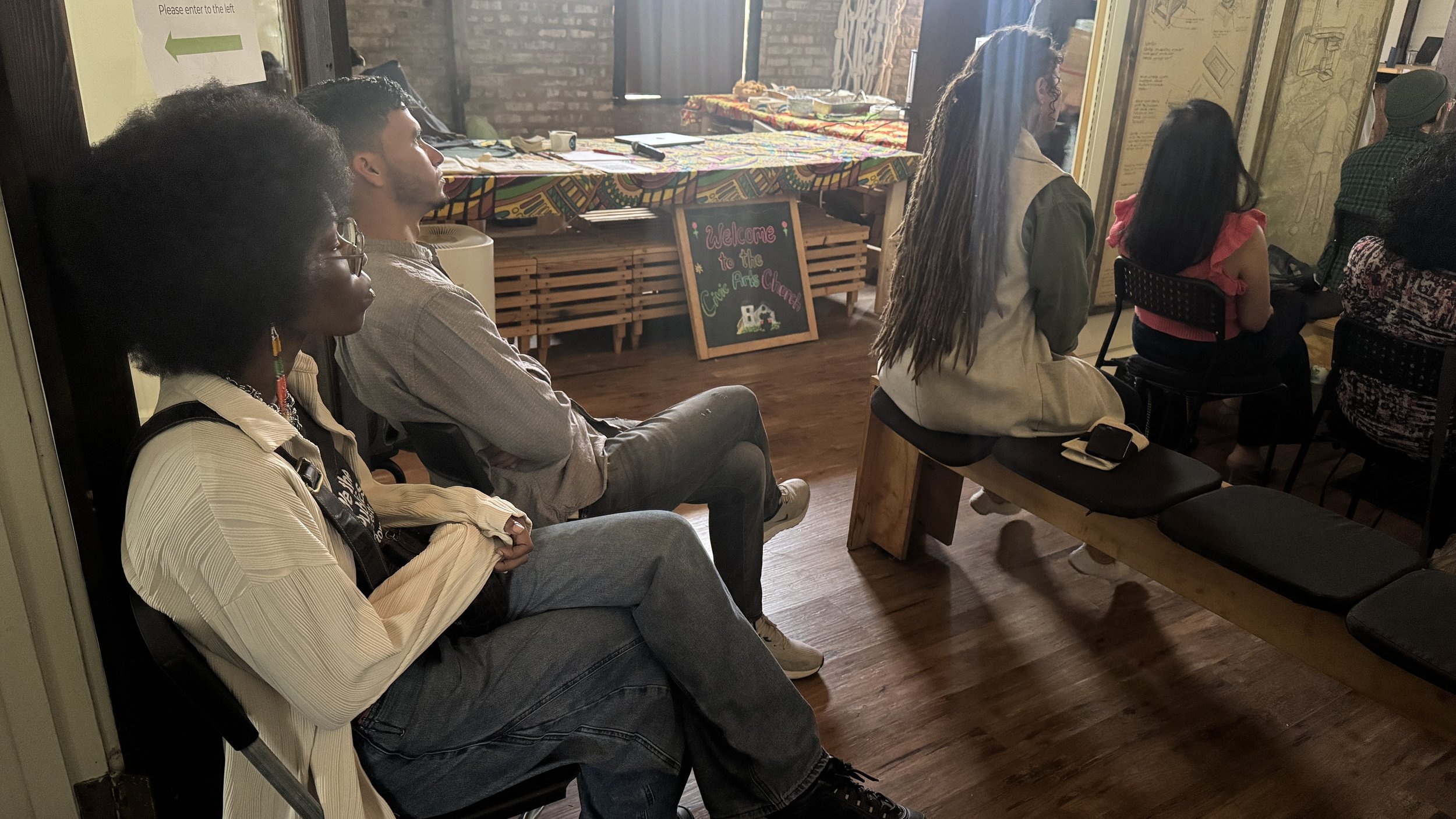
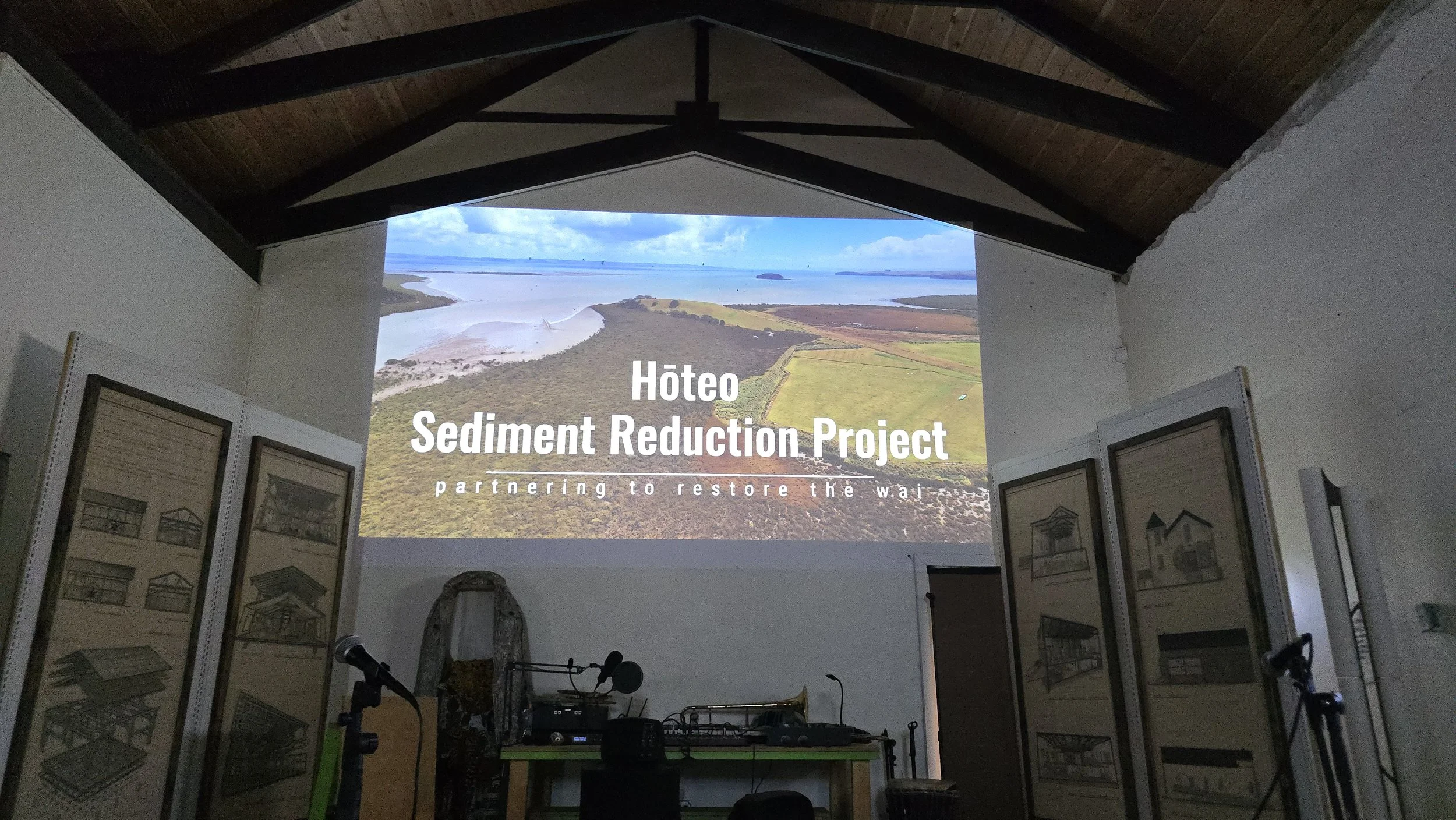
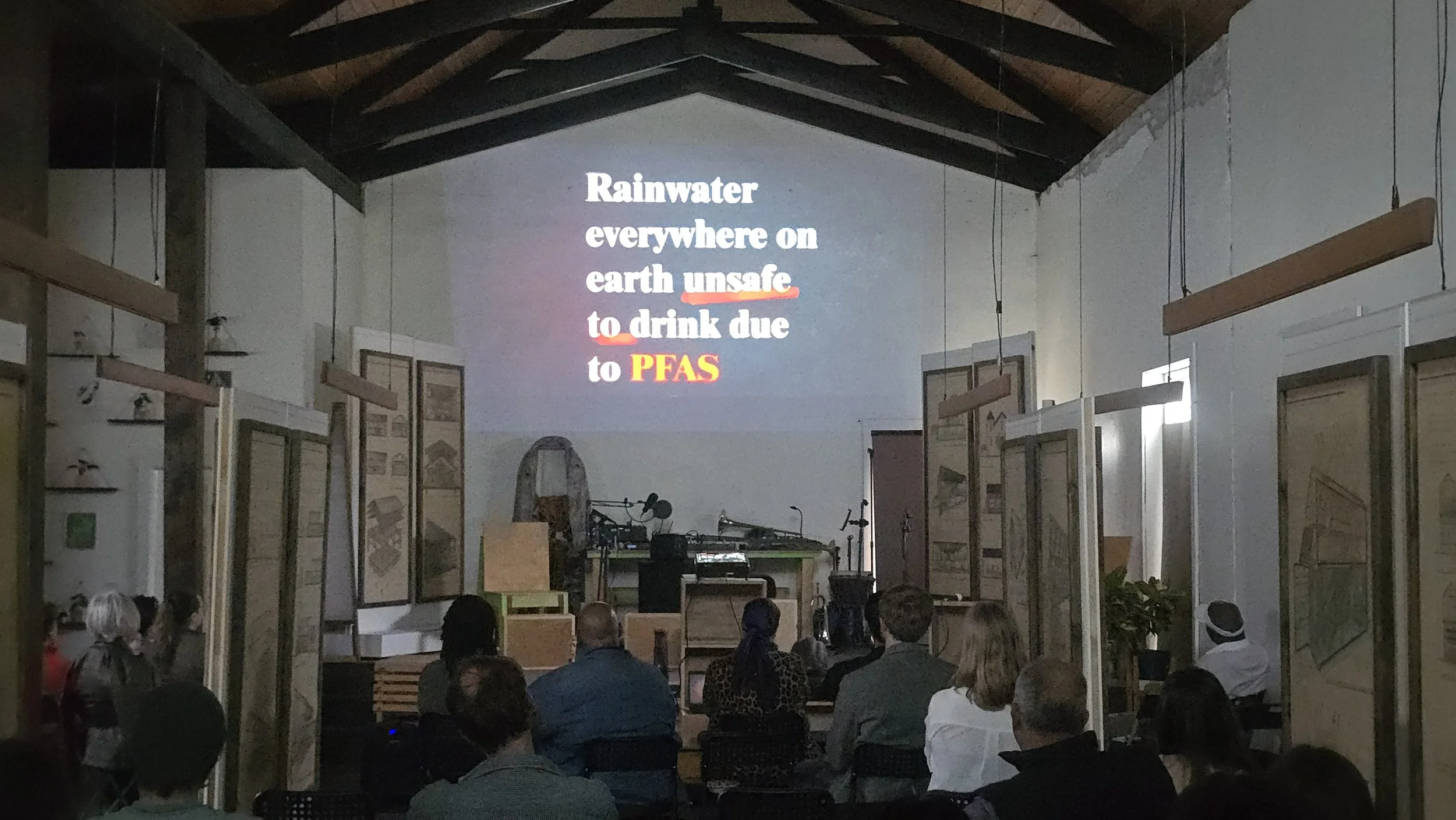
Throughout the event, WWFF Founder Robert Strand guided the audience through the day’s agenda, emphasizing how storytelling and film can drive policy and action. The program featured a deeply moving panel connecting grassroots advocacy directly to regional policy. Attendees heard directly from Michael and Nora Strande, who shared the emotional journey behind “Amara’s Law,” Minnesota’s groundbreaking ban on forever chemicals (PFAS) passed in honor of their late daughter and sister, Amara. They were joined by Debra Shore, former Regional Administrator for EPA Region 5 and former commissioner of the Metropolitan Water Reclamation District of Greater Chicago, who brought decades of environmental governance and regulatory perspective to the discussion.
Mohamed Salem’s Sweet Water Human-in-Residence Immersion
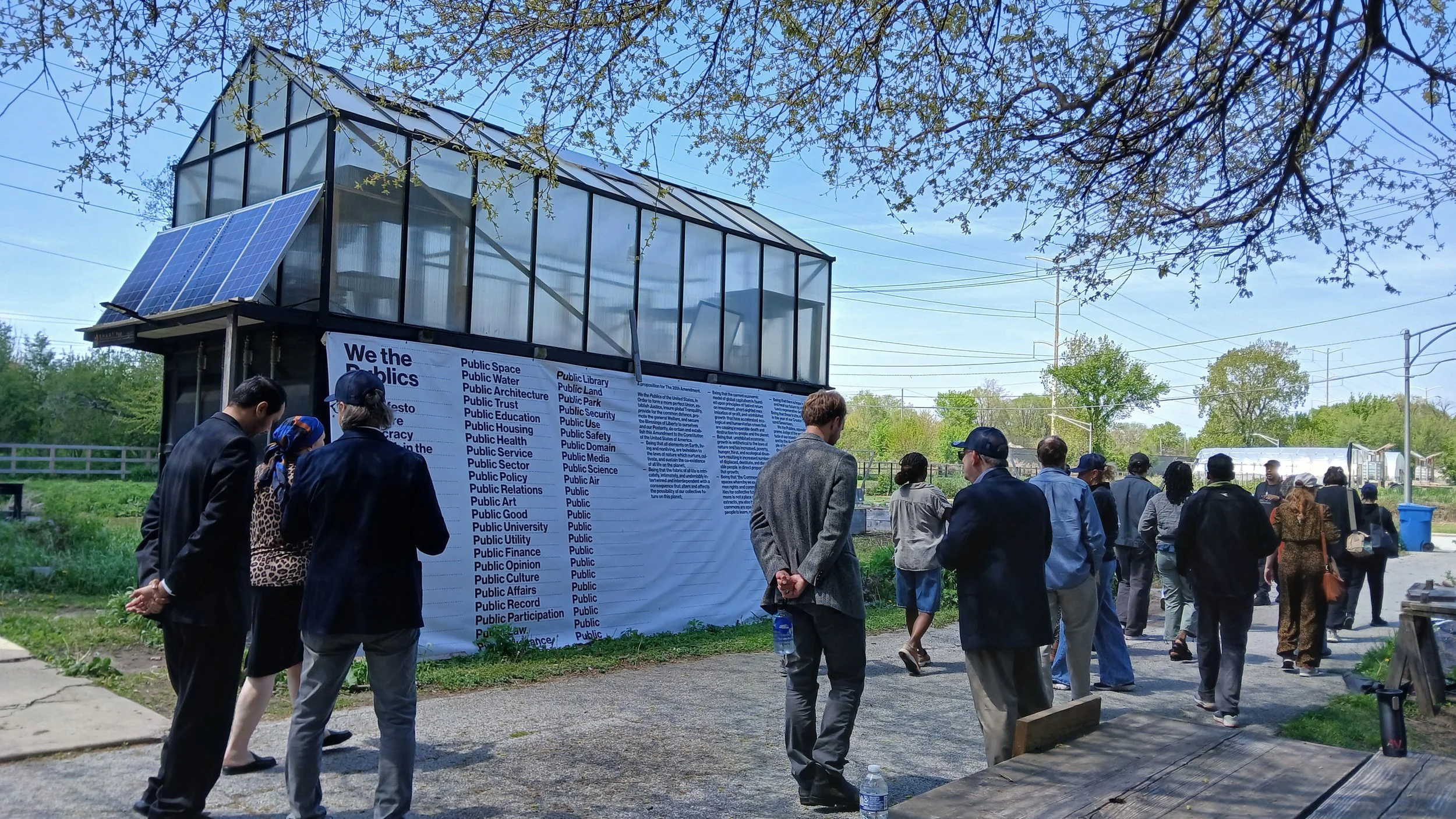
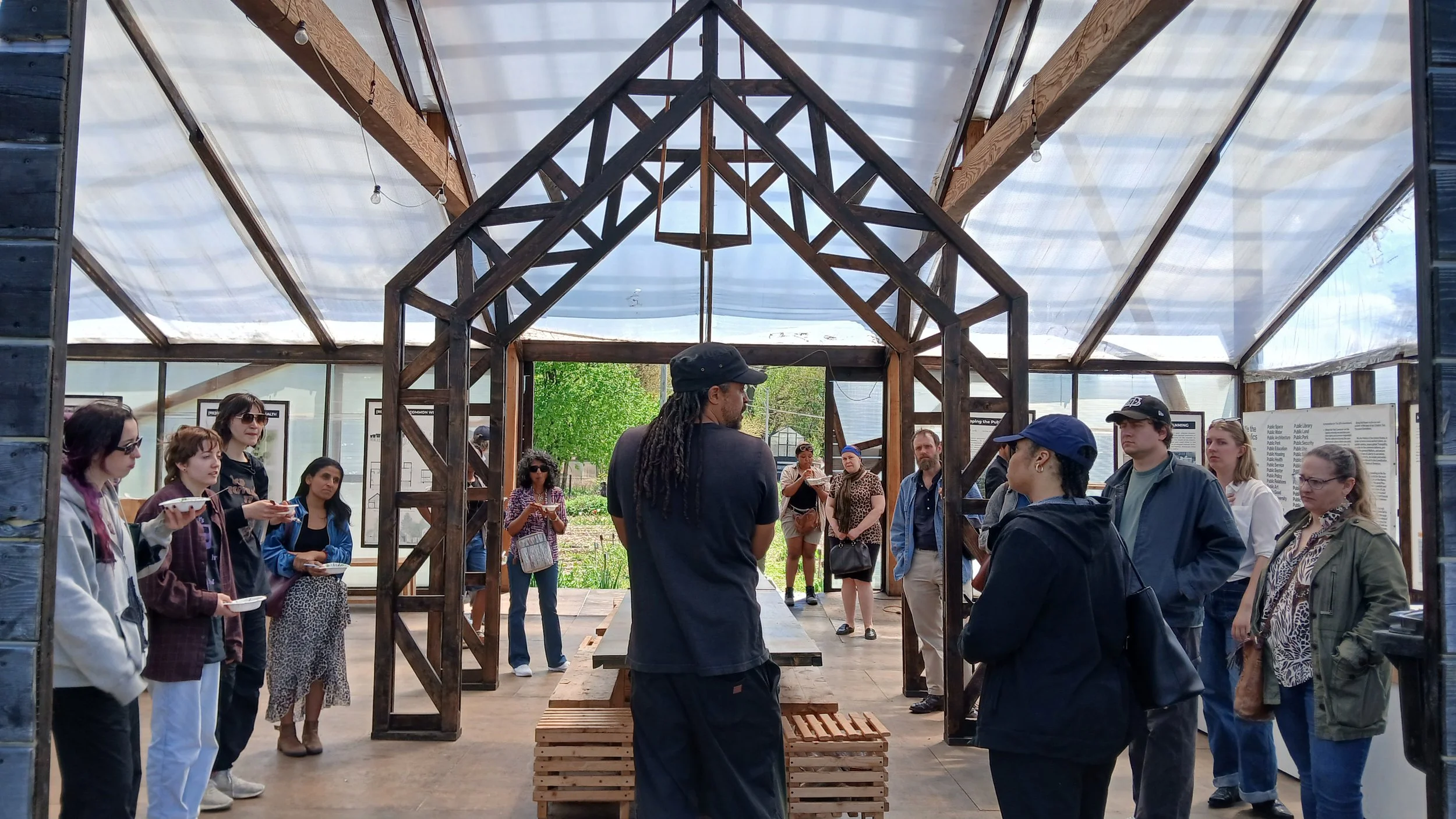
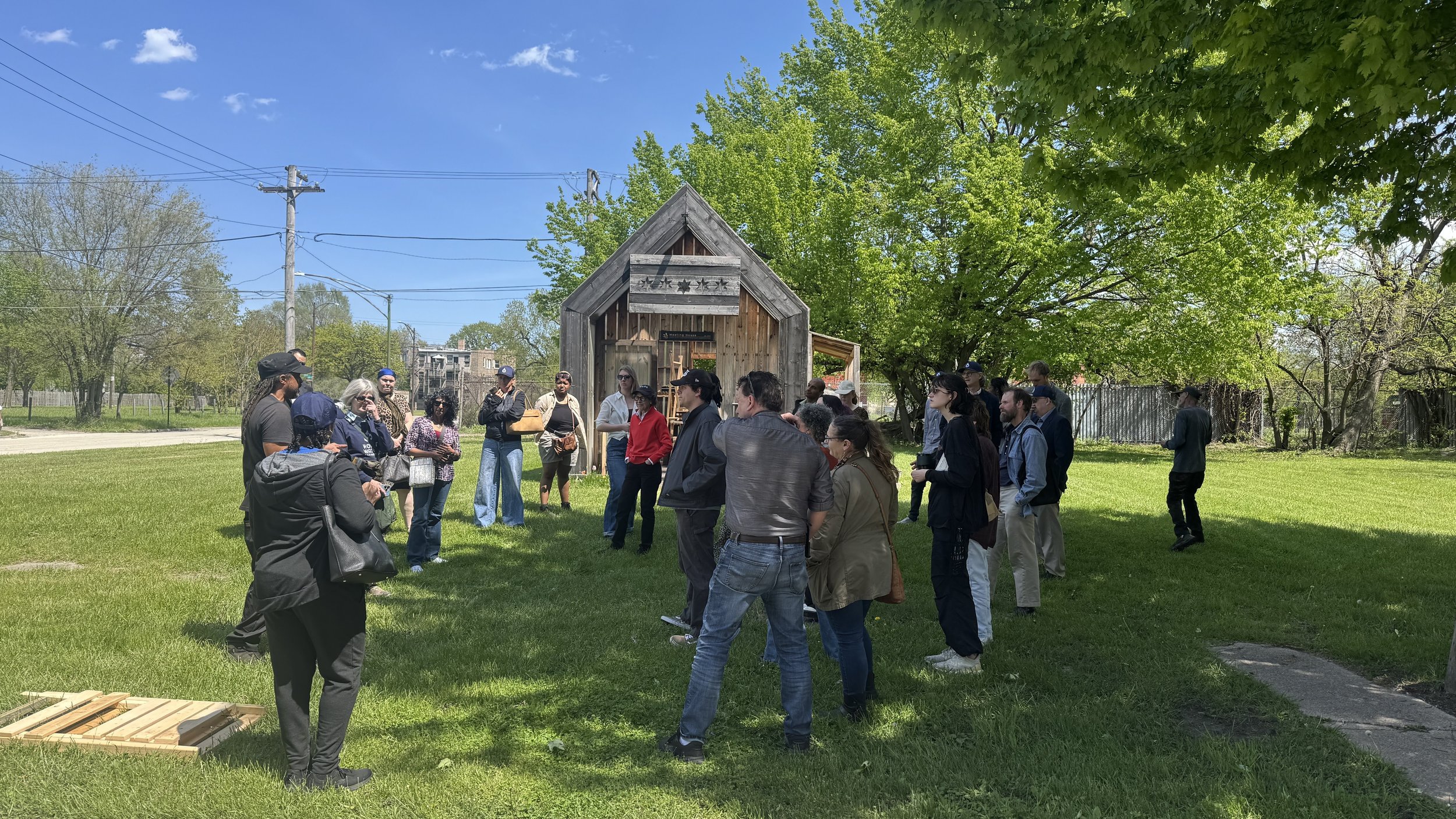
From May 12 through May 29, Mohamed Salem returned to SWF for a two-week Sweet Water Human-in-Residence Immersion. Designed to deeply engage with the land, neighborhood, and the inherent bounty of accessible, local resources, the residency reflected SWF’s core ethos of transforming waste into resources. At its core, the immersion was an invitation into SWF’s practice of Regenerative Neighborhood Development—immersing into Sweet Water flows of hands-on labor, creative expression, authentic community fellowship, and reflection so that experiences at The Common|Wealth could be directly translated into praxis back home in the desert.
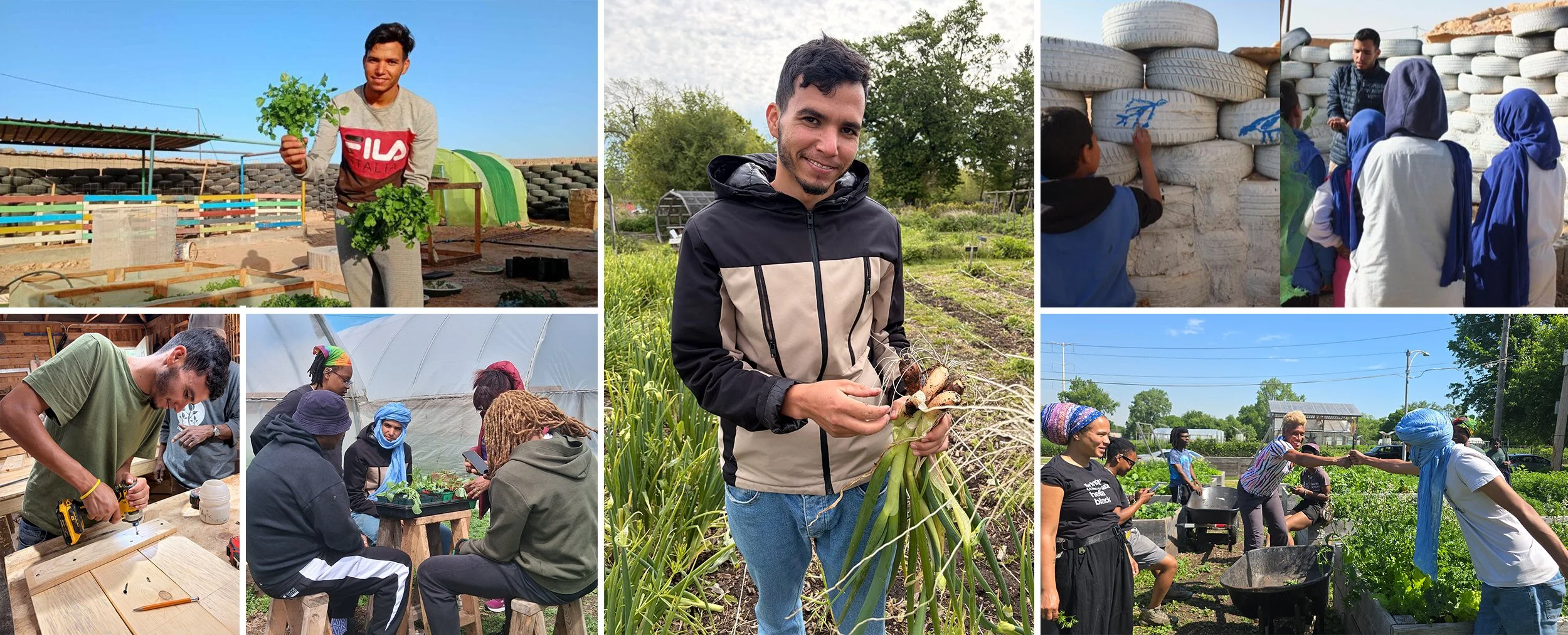
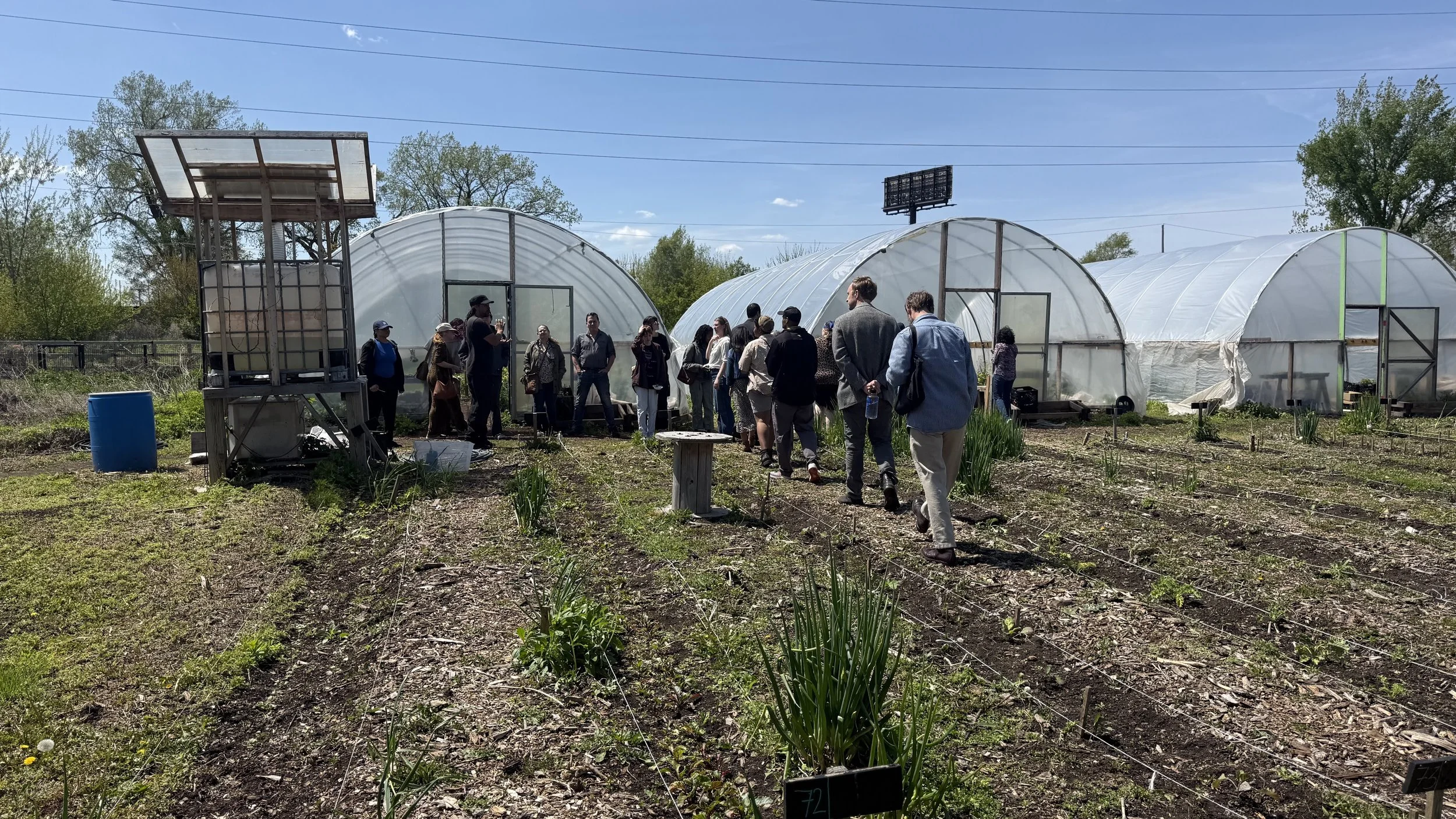
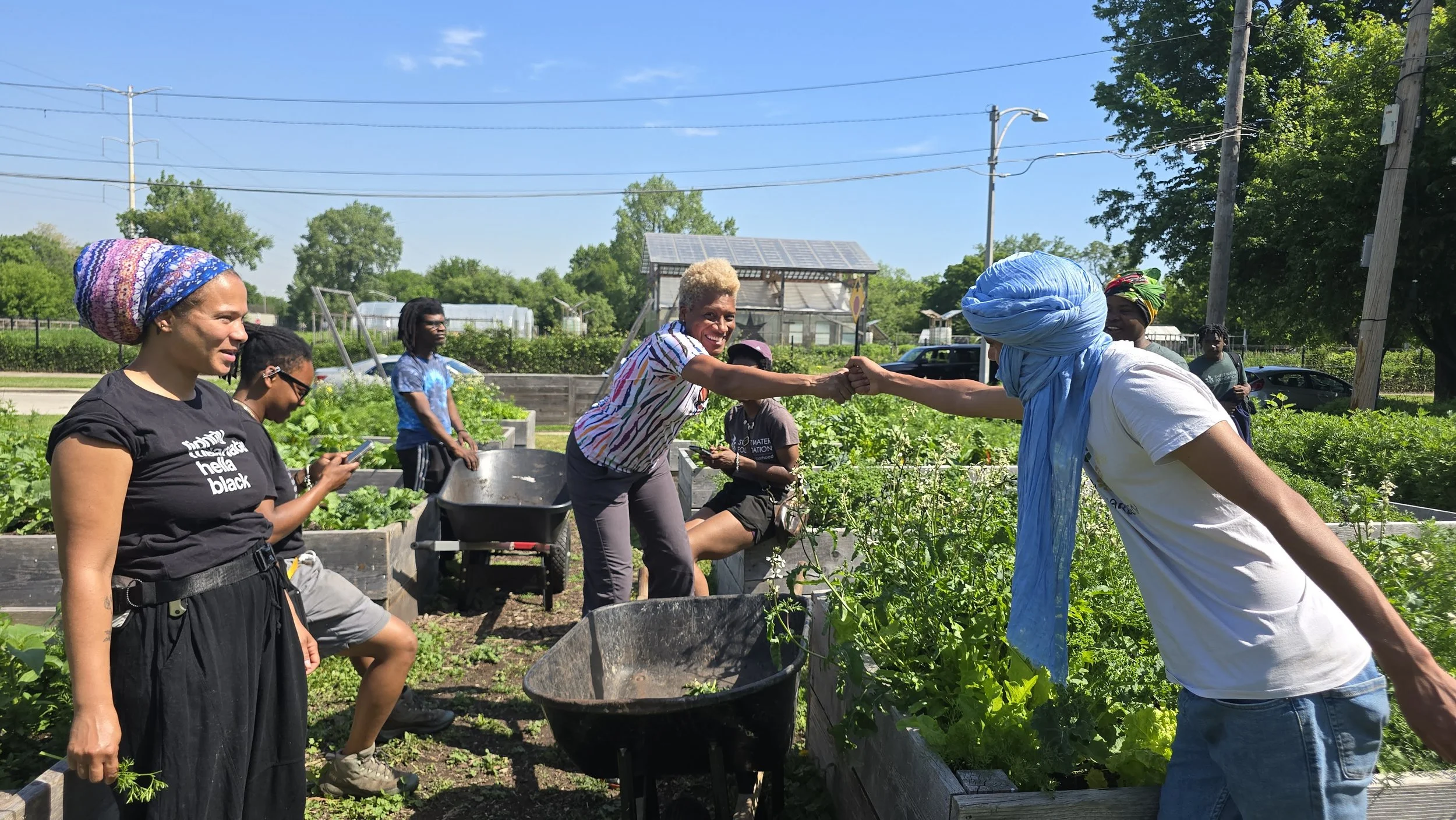
Mohamed Salem’s daily routine was deeply woven into the seasonal rhythms of The Common|Wealth with a focus on agroecology, carpentry and design, civic arts, and community engagement. On the Community Farm, he worked side by side with the SWF team and Neighborhood Academy members, seeding, transplanting, weeding, pruning, and harvesting. Beyond the physical work, Mohamed witnessed how SWF uses every aspect of agroecology as an intentional act and space for intergenerational learning and neighborhood connection. During his residency, he also helped construct key farm infrastructure for the upcoming summer crops, building trellises for hot-weather crops like cucumbers and tomatoes.
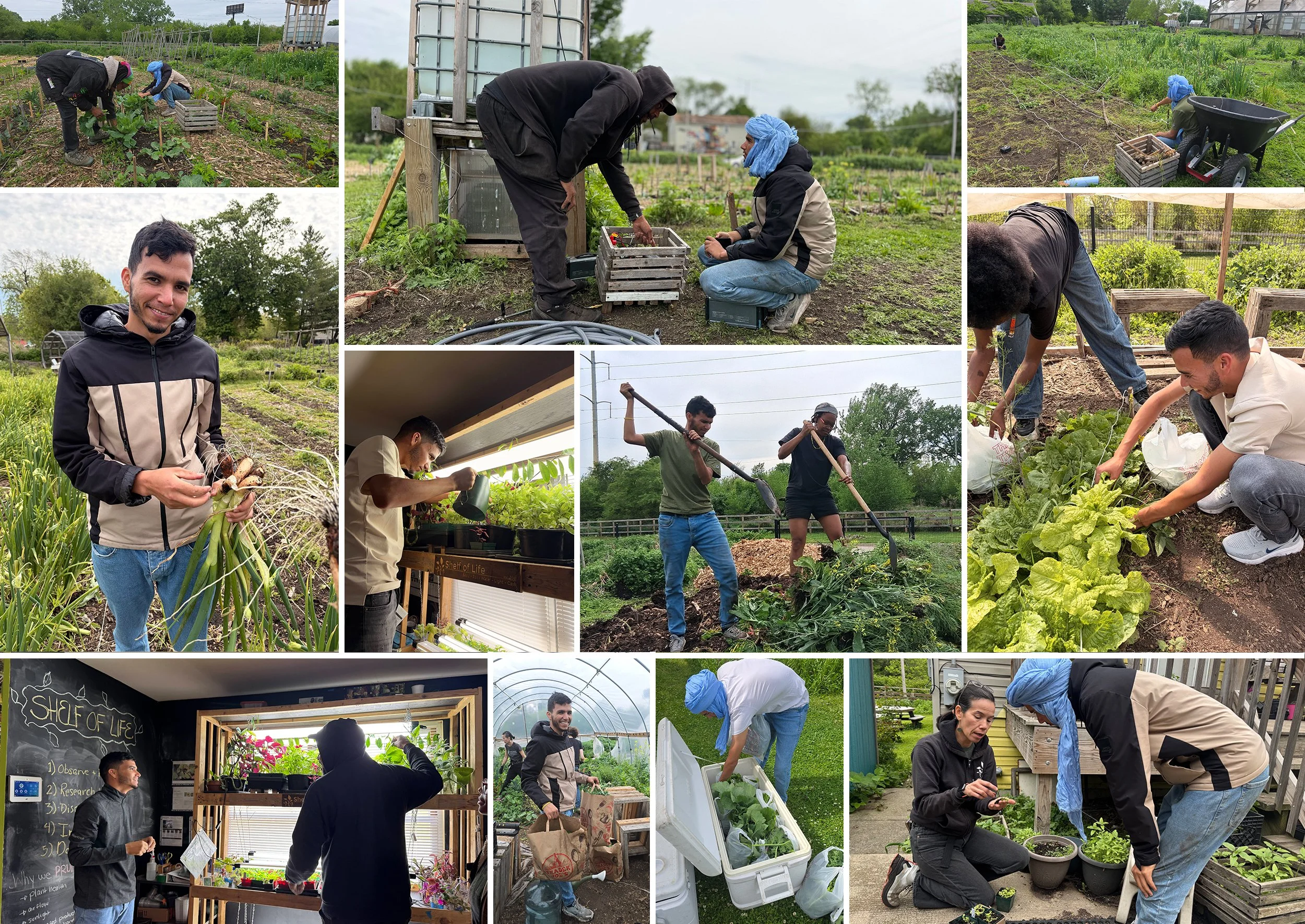
Working alongside the community at The Common|Wealth catalyzed a shift in Mohamed's approach to community engagement. Reflecting on his past work in the desert, Mohamed realized he had previously engaged community members as observers—guiding them to watch and listen. Experiencing SWF’s hands-on collective practice transformed his strategy. "In the past, I used to lead the community as an observer—having them watch what I was doing while I explained the process. But inviting the community to interact and do the work with their own hands is so much better," he reflected. "People get closer, work with their hands, and see the immediate results of something they built themselves. Plus, shared labor allows everyone to help—leaving lighter tasks for kids or elders. Moving forward, this hands-on engagement will be a core shift in my strategy." Mohamed shared future plans to invite children from local schools to participate in drawing and planting seedlings in garden beds.
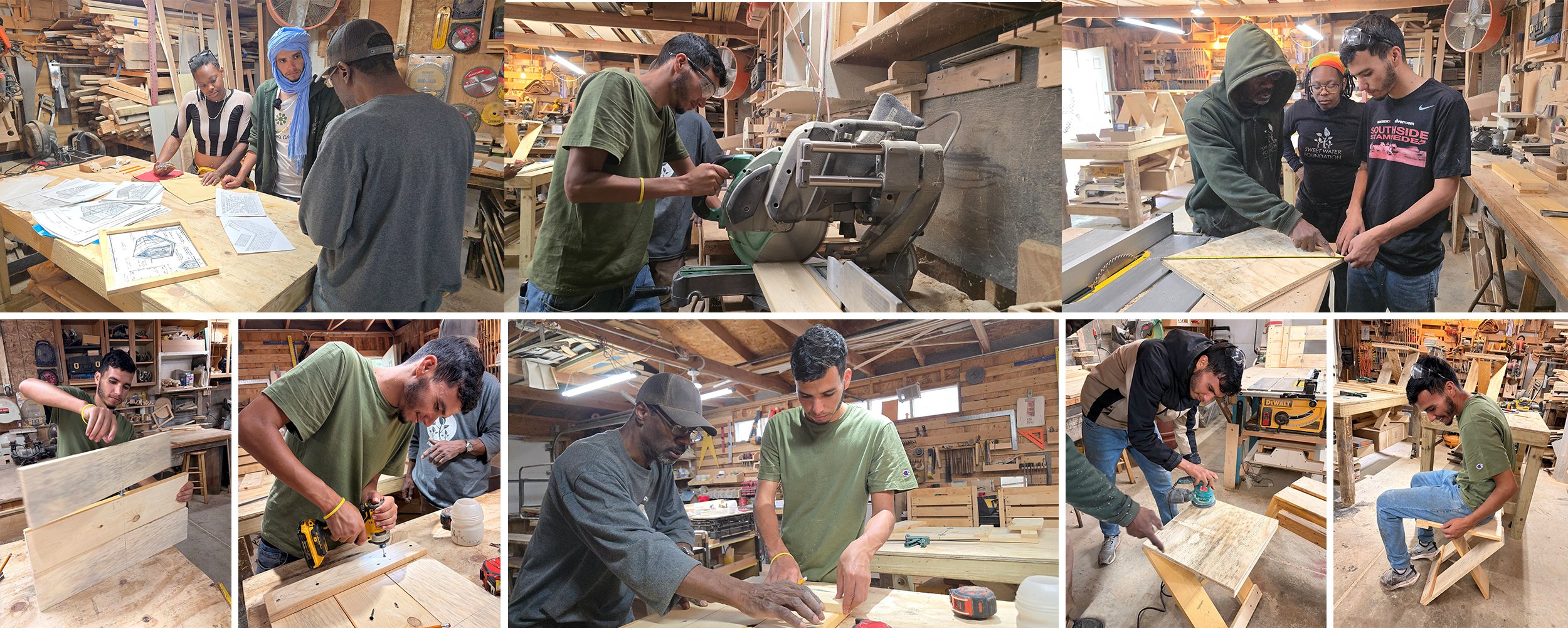
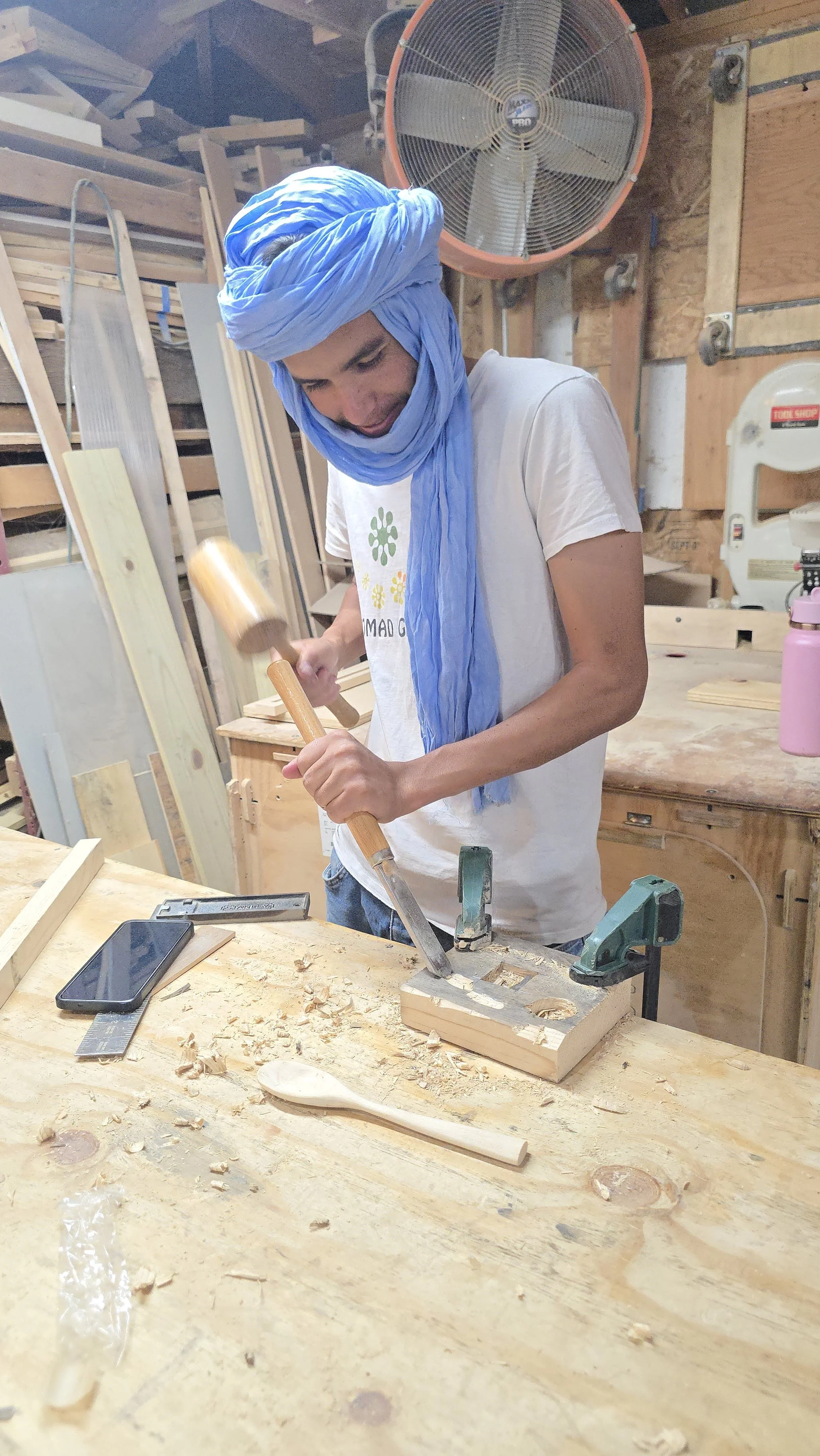
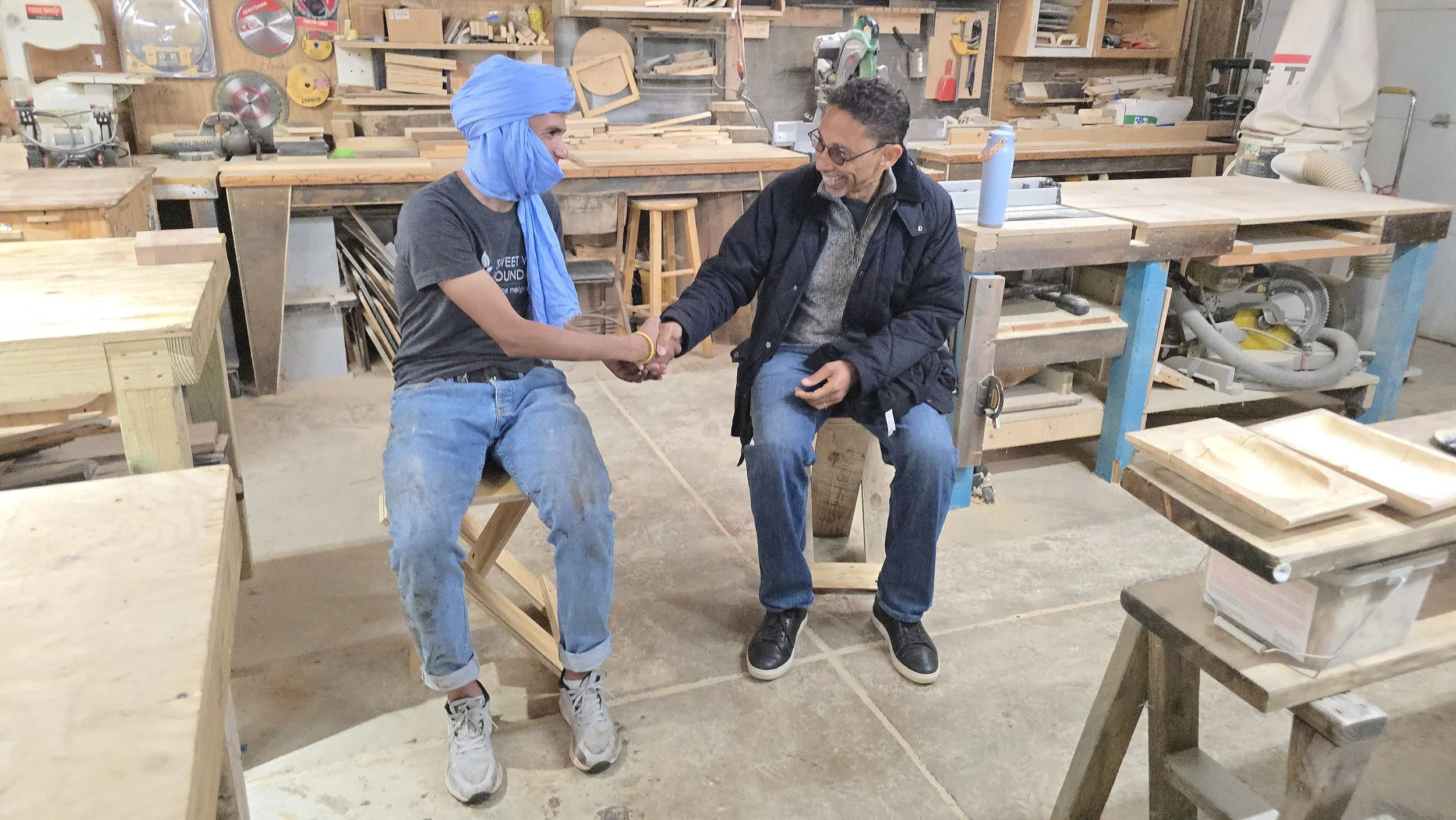
In the Work-Shop and Garage Shop, Mohamed engaged with SWF’s full cycle of regenerative design—from deconstruction to designing and building signature SWF products like interlocking ponies and benches, as well as the new collapsible seat design. Exchanging craftsmanship techniques across desert and urban environments, he was also introduced to using a router to carve scrap timber, transforming discarded offcuts into handcrafted wooden spoons. This cross-cultural exchange underscored for Mohamed that techniques learned internationally in farming or construction are not meant to be copied blindly; they are meant to be adapted, customized, and refined to fit the specific climate, material conditions, and needs of one’s own community.
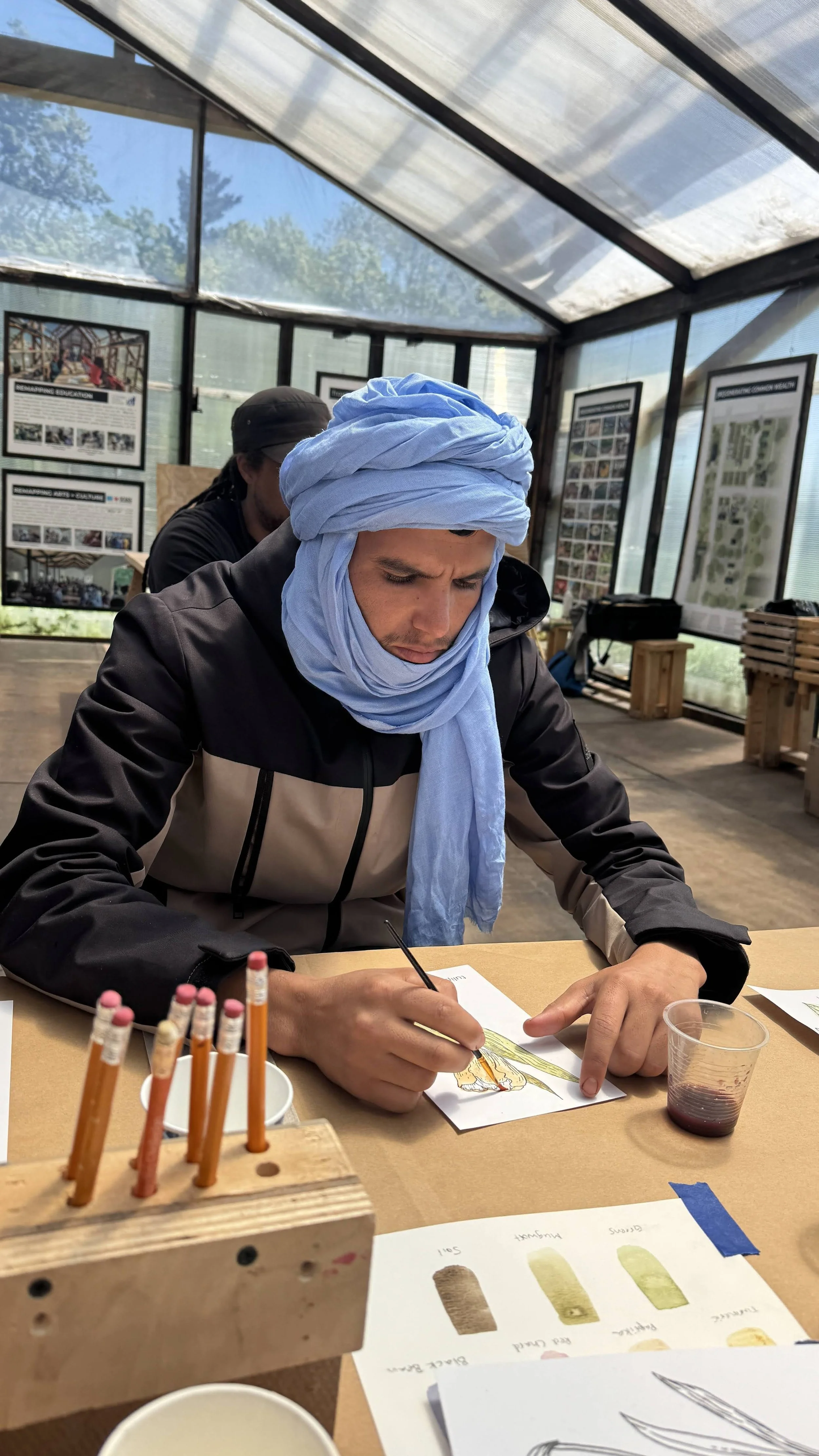
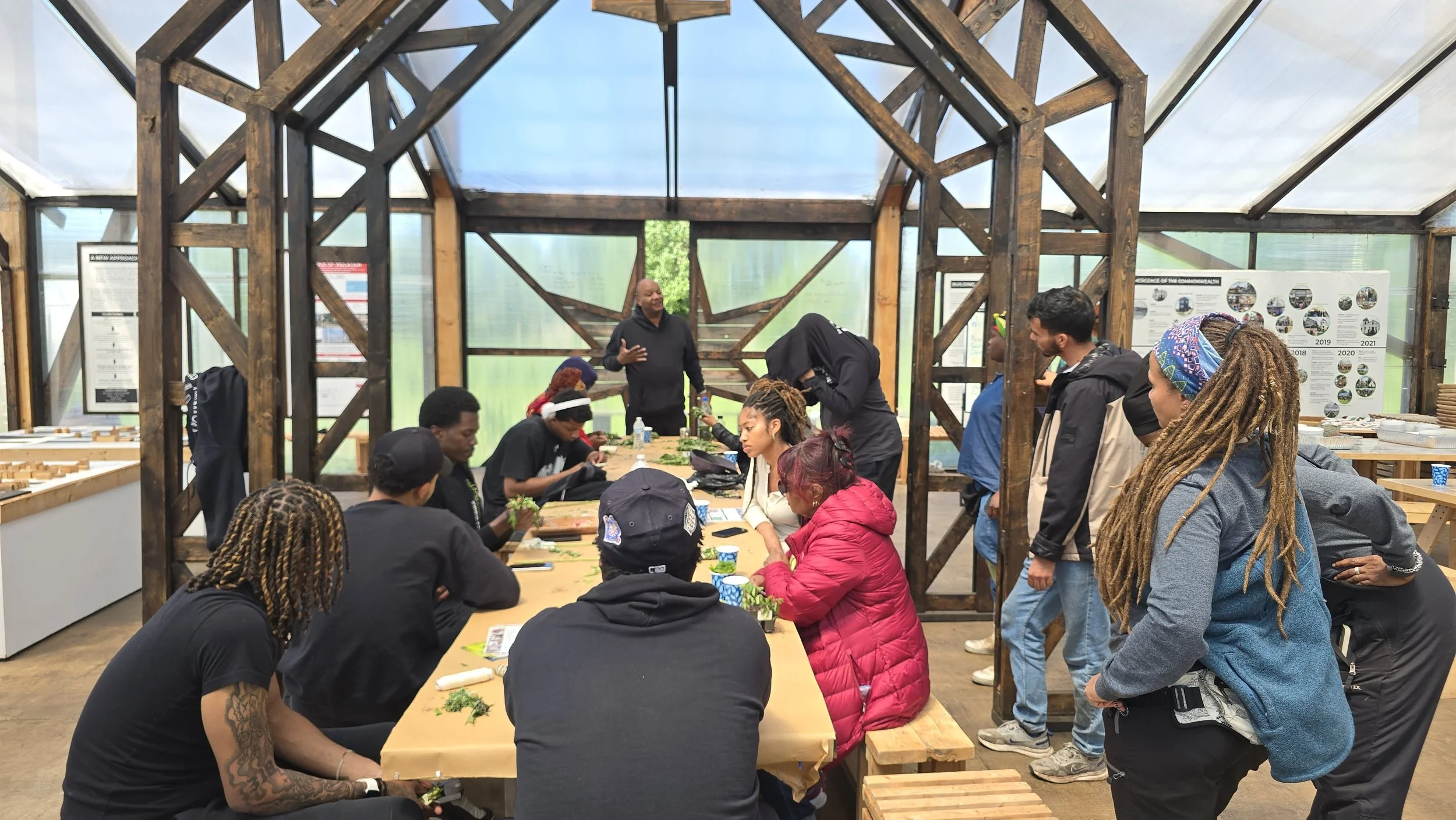
Through Civic Arts, Mohamed experienced how SWF weaves arts and culture into daily life. At SWF, Civic Arts is intentionally accessible, using whatever resources are readily available to unlock imagination, spark joy, and heal the community using the materials before us. Whether harvesting leaves and berries to mix natural paints, preparing farm-to-table meals with the season’s abundance, or hosting neighbors during weekly Wellness Wednesday gatherings and early-season Neighborhood Markets, the creative process remained open, welcoming, and grounded in the immediate landscape.
A central takeaway from Mohamed’s residency was recognizing documentation as an active tool for cultural preservation. For marginalized and displaced communities where oral traditions were historically the primary record, history faces a constant risk of being erased or misrepresented by outside narratives. At SWF, Mohamed observed how daily documentation—from photos and written reflections to field notes—serves as a vital act of memory-keeping:
““When I visited Sweet Water, I saw that documenting could be as simple as a picture, a note, or a reflection,” Mohamed shared. “Day after day, as you collect data, that is how you preserve the work you do and safeguard the history of your community.””
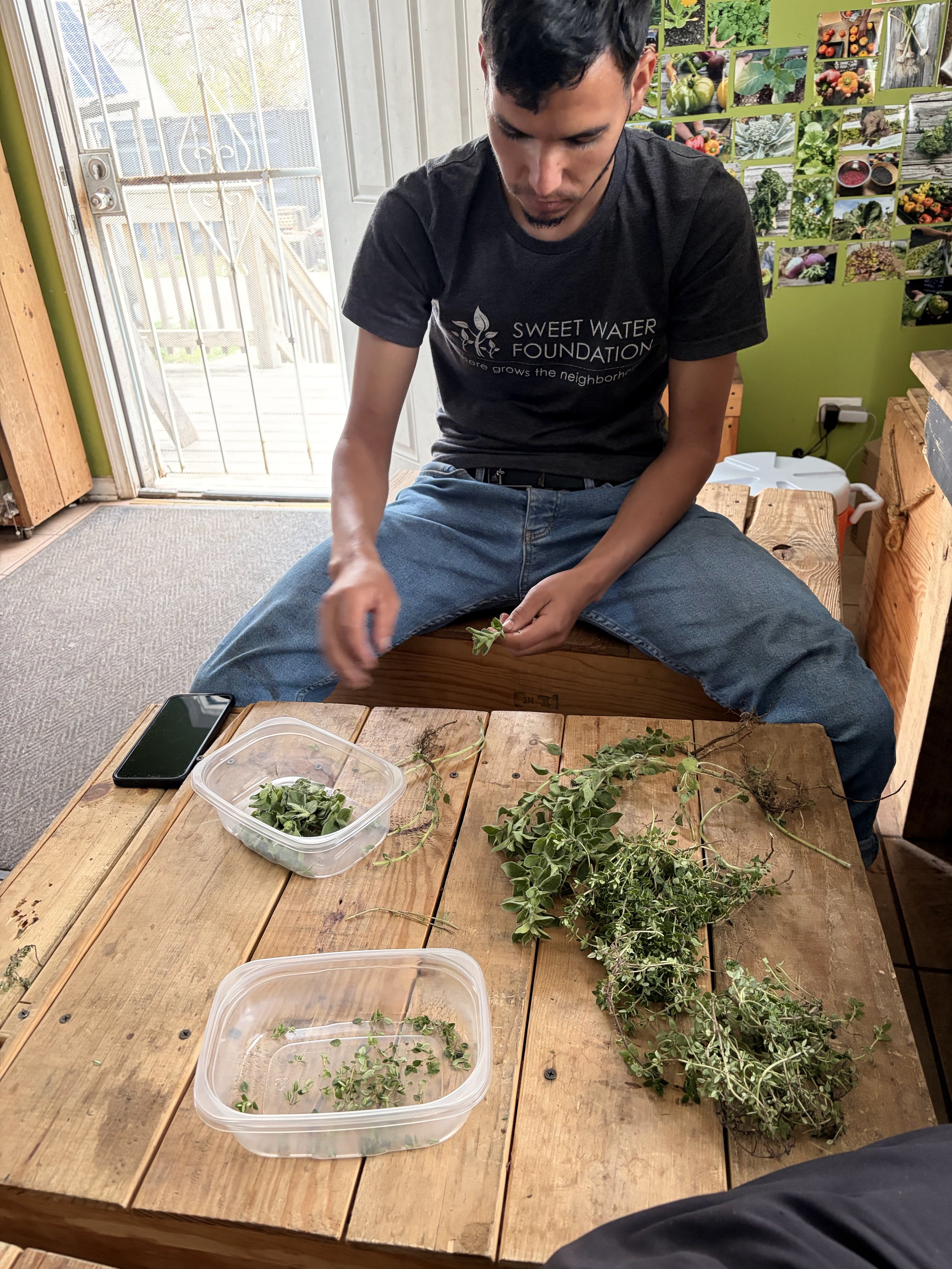
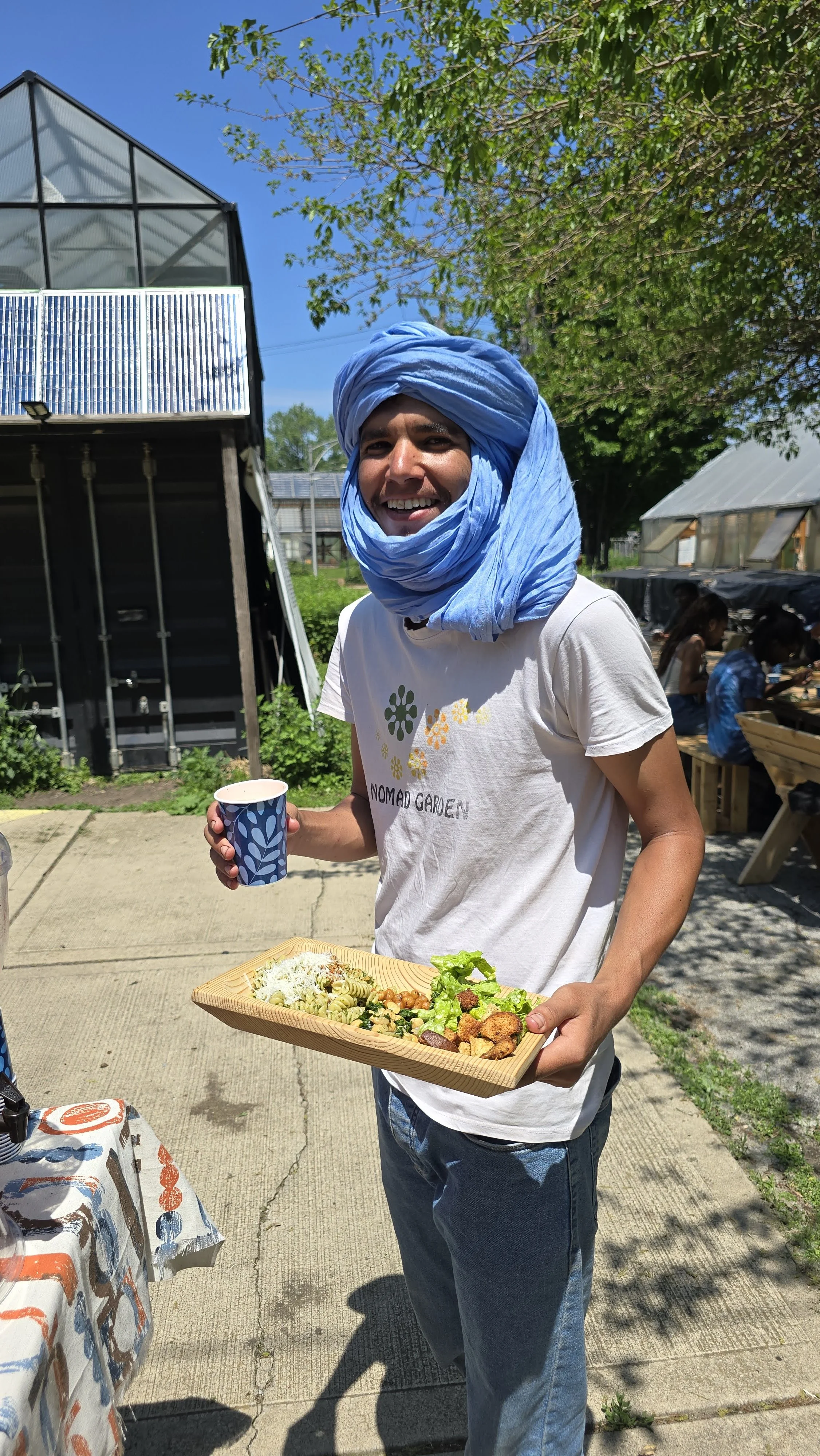
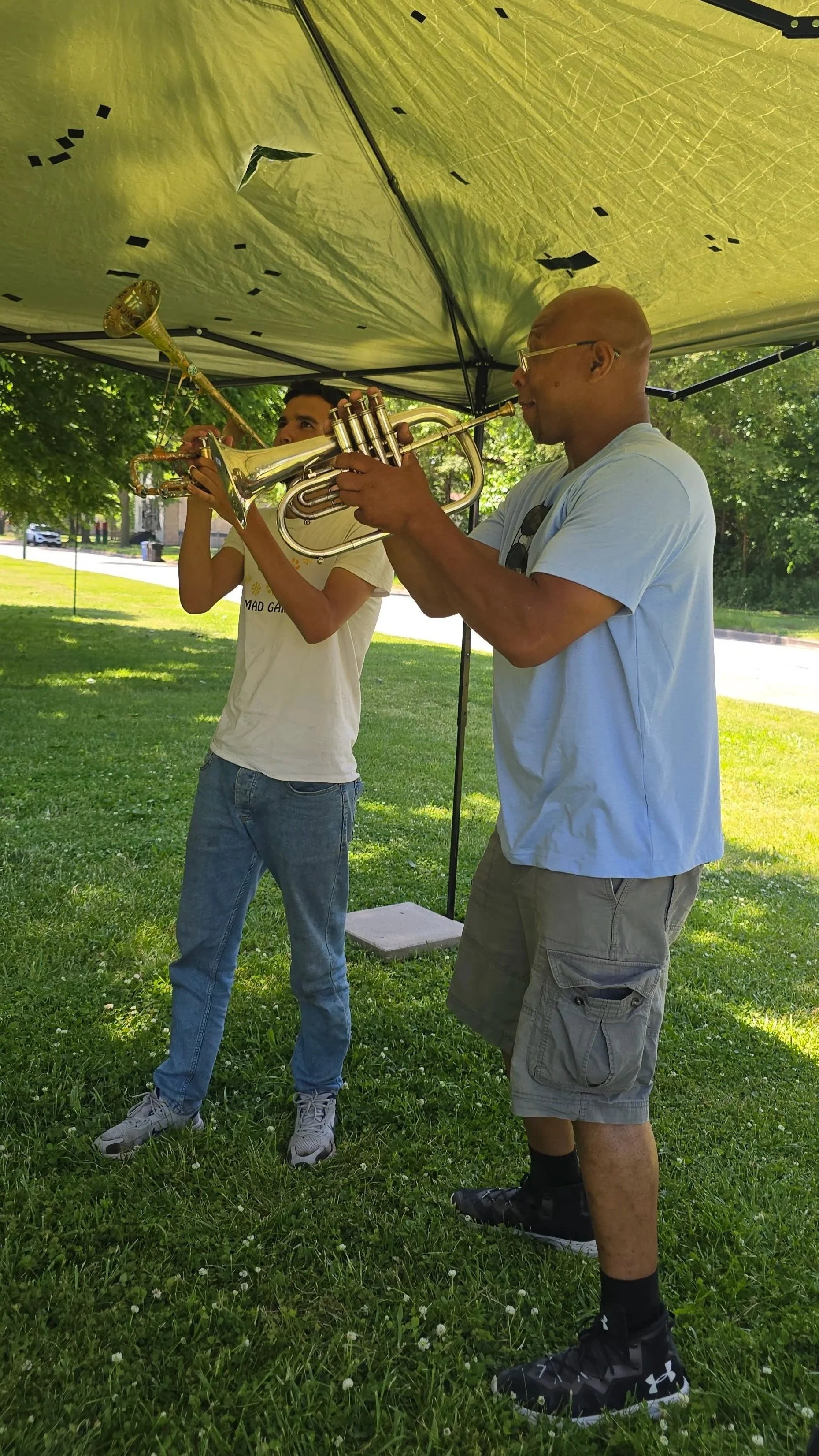
Beyond the farm and workshops, the residency opened doors to broad-spectrum fellowship and relational exchange. Mohamed encountered a rich tapestry of people—engaging in dialogue with renowned scholars, authors, and organizers like Robin D.G. Kelley and Imani Perry, while simultaneously sharing space with South Side neighbors, local musicians, and visiting youth. These interactions highlighted the true breadth of community engagement at The Common|Wealth. Through this residency, Mohamed saw firsthand that SWF’s work extends far beyond growing food and that agroecology, Regenerative Education, spatial design, and Civic Arts are interconnected, essential elements for holistically addressing a community's needs.
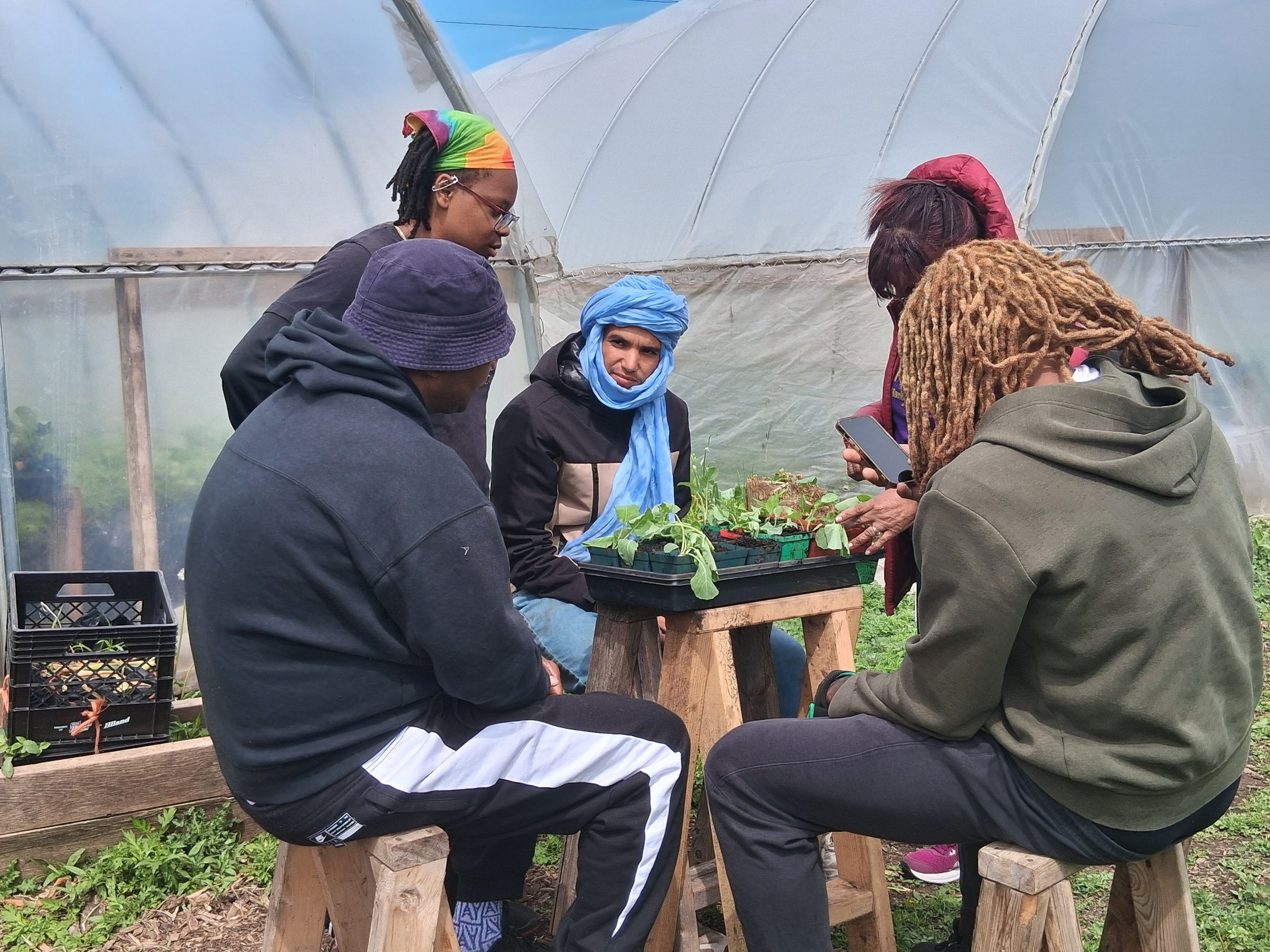
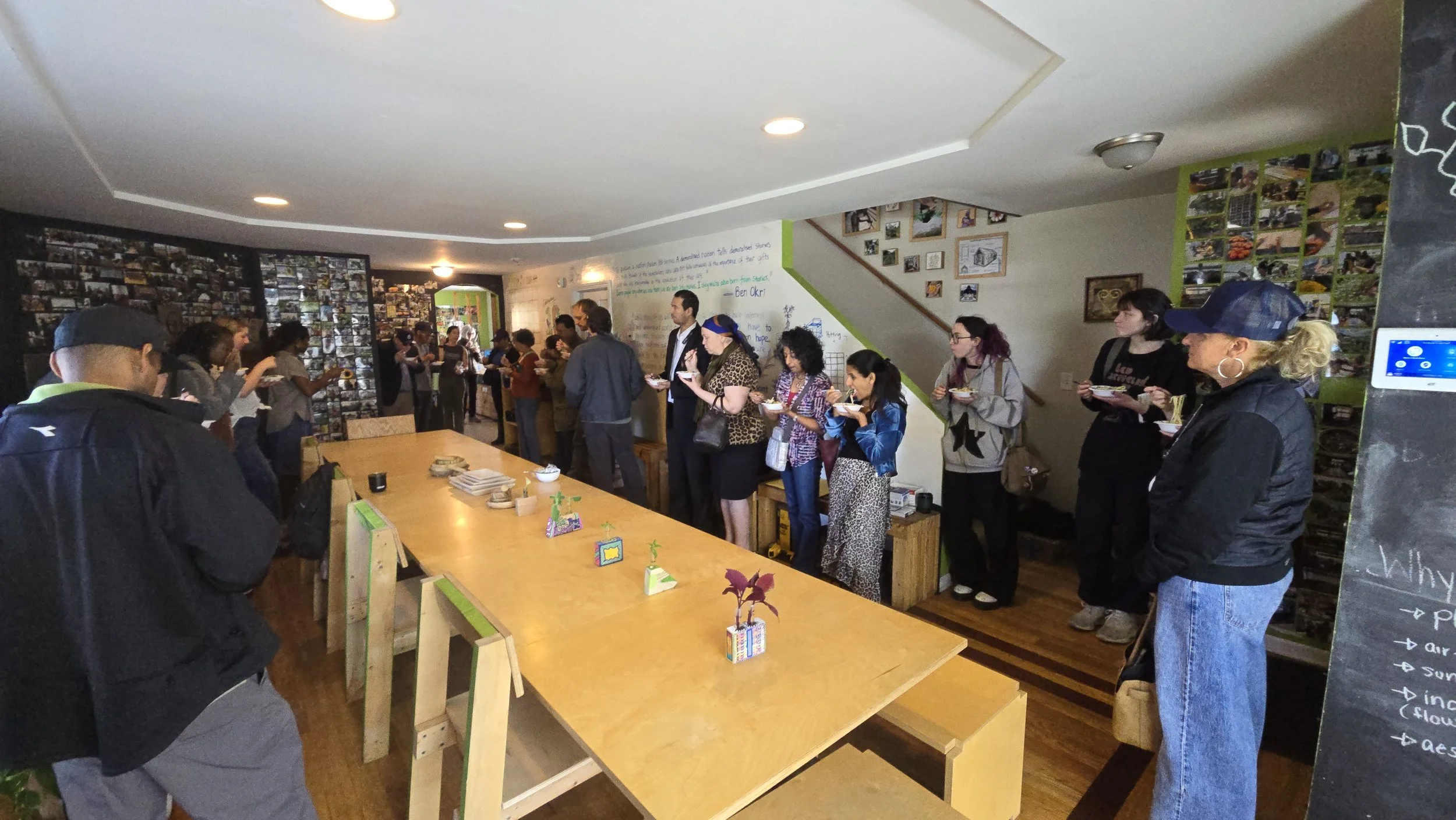
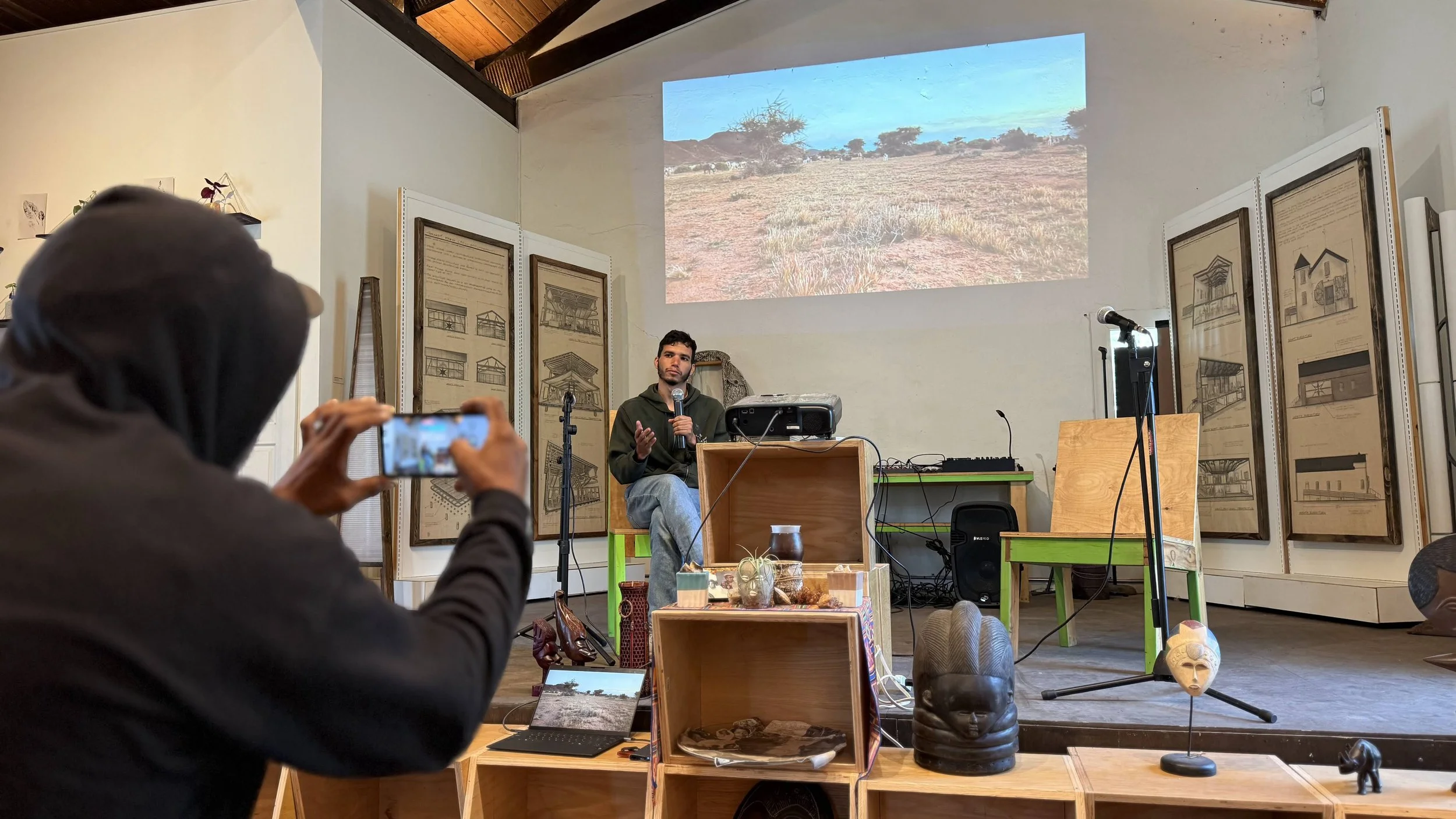
The immersion reached its emotional peak with a community gathering and the world premiere screening of Mohamed’s latest film project, Farming in the Desert. The screening offered a culminating celebration of his journey and cemented the lifelong bond between the Sahrawi struggle and the South Side of Chicago.
The Power and Possibilities of Regenerative Praxis
The story of Mohamed Salem Mohamed Ali’s journey to Sweet Water Foundation is more than a recap of events—it is a proof of concept. It demonstrates what becomes possible when global connections move past performative solidarity and ground their relationships in real work, values-based praxis, shared resources, and mutual hospitality.
Whether applying sandponics in the severe heat of the Hamada desert or agroecology to reclaimed vacant lots in Chicago, the underlying imperative is the same: we must actively cultivate localized self-reliance, honor the wisdom of the land, and develop regenerative practices that nurture human potential while restoring ecological health.
When we share RND across geographical, political, and cultural borders, we do not merely exchange techniques—we weave a regenerative web of hope. By welcoming one another into our spaces, our struggles, and our daily flows, we model a world where communities everywhere have the tools, the partnerships, and the collective power to flourish.
There GROWS the neighborhood!