
Reclaiming Community Wellness at the Inaugural “We the Publics…” Civic Arts Talk at The Common|Wealth
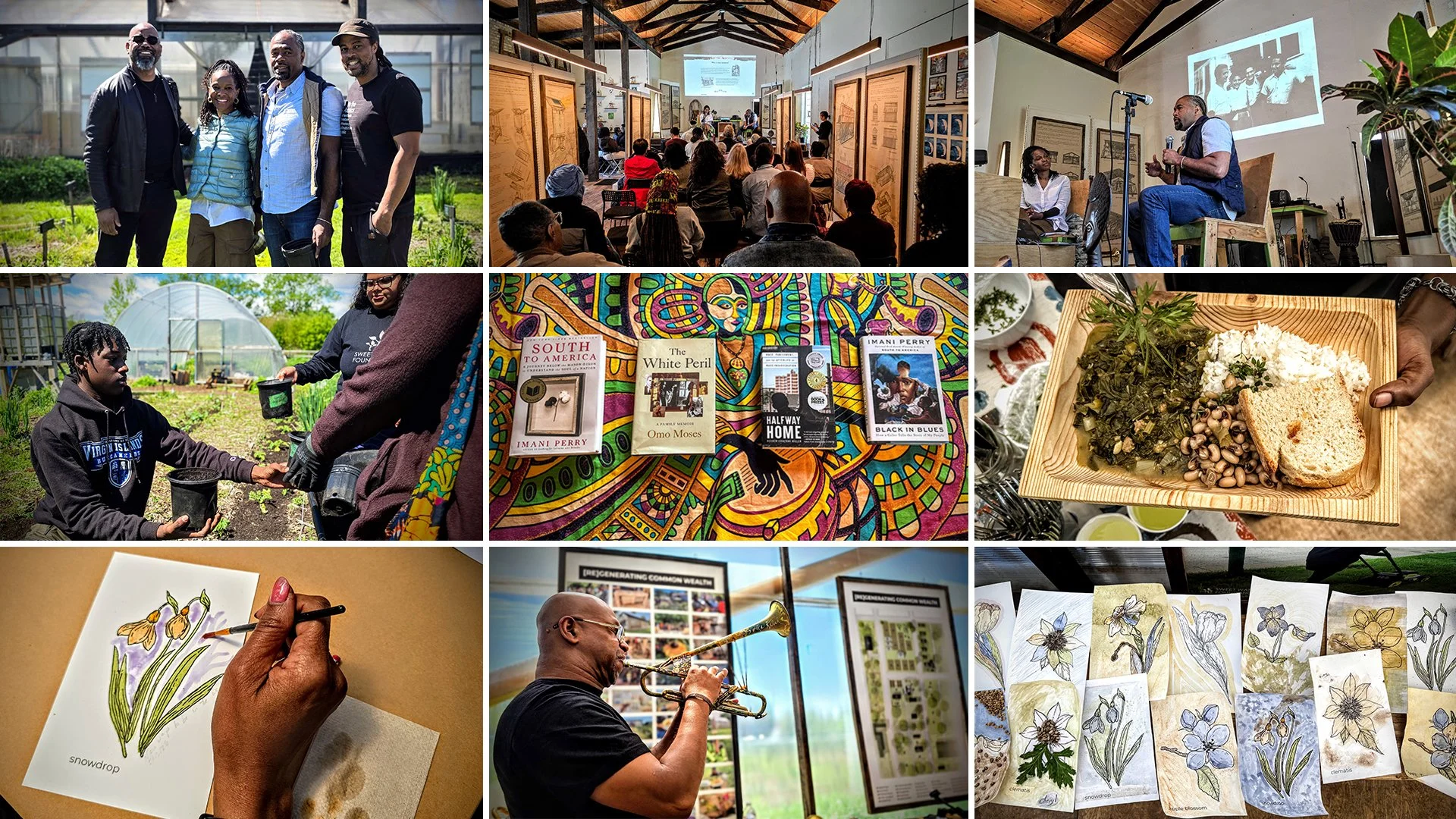
Photo credit: Sweet Water Foundation
On May 13, 2026, Sweet Water Foundation launched its first formal Wellness Wednesday (WW) of the 2026 season, activating a decades-long ritual of healing, re-pair, and regeneration. This day served as a living embodiment of what Wellness Wednesday truly is, as the weekly ritual coincided with the inaugural “We the Publics…” Civic Arts Talk Series featuring Dr. Imani Perry, Dr. Reuben Jonathan Miller, and Omo Moses, kicking off a year-long intersectional platform designed to unpack the interconnectedness across land, labor, history, environmental stewardship, and design. The day brought together an intergenerational network of scholars, artists, students, elders, children, and neighbors who engaged across central nodes of Sweet Water’s Communiversity campus – spaces like the Hoop Houses, the Thought Barn, and the Civic Arts Church.
What follows is an archival trace of that day; a sequence of collective labor and creation, dialogue and remembrance that demonstrates how both knowledge and community are constructed, interpreted, and deeply tied to human experience. Each of these serves as an essential element that both reclaims the meaning of “community wellness” and actively contributes to its ongoing cultivation. Read on to learn more about this special Wellness Wednesday.
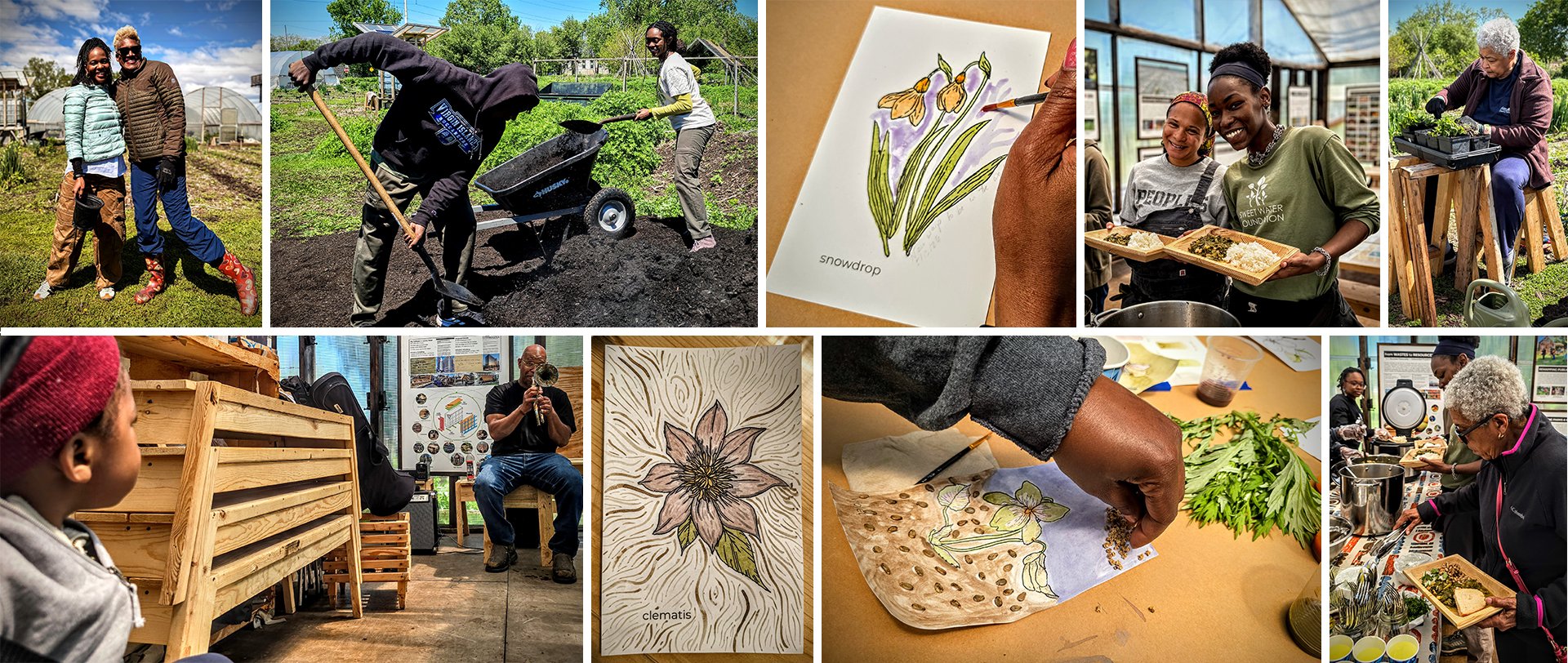
Photo credit: Sweet Water Foundation
May 13, 2026 | Launch of the 2026 Wellness Wednesday Ritual and “We the Publics…” Civic Arts Talks Series
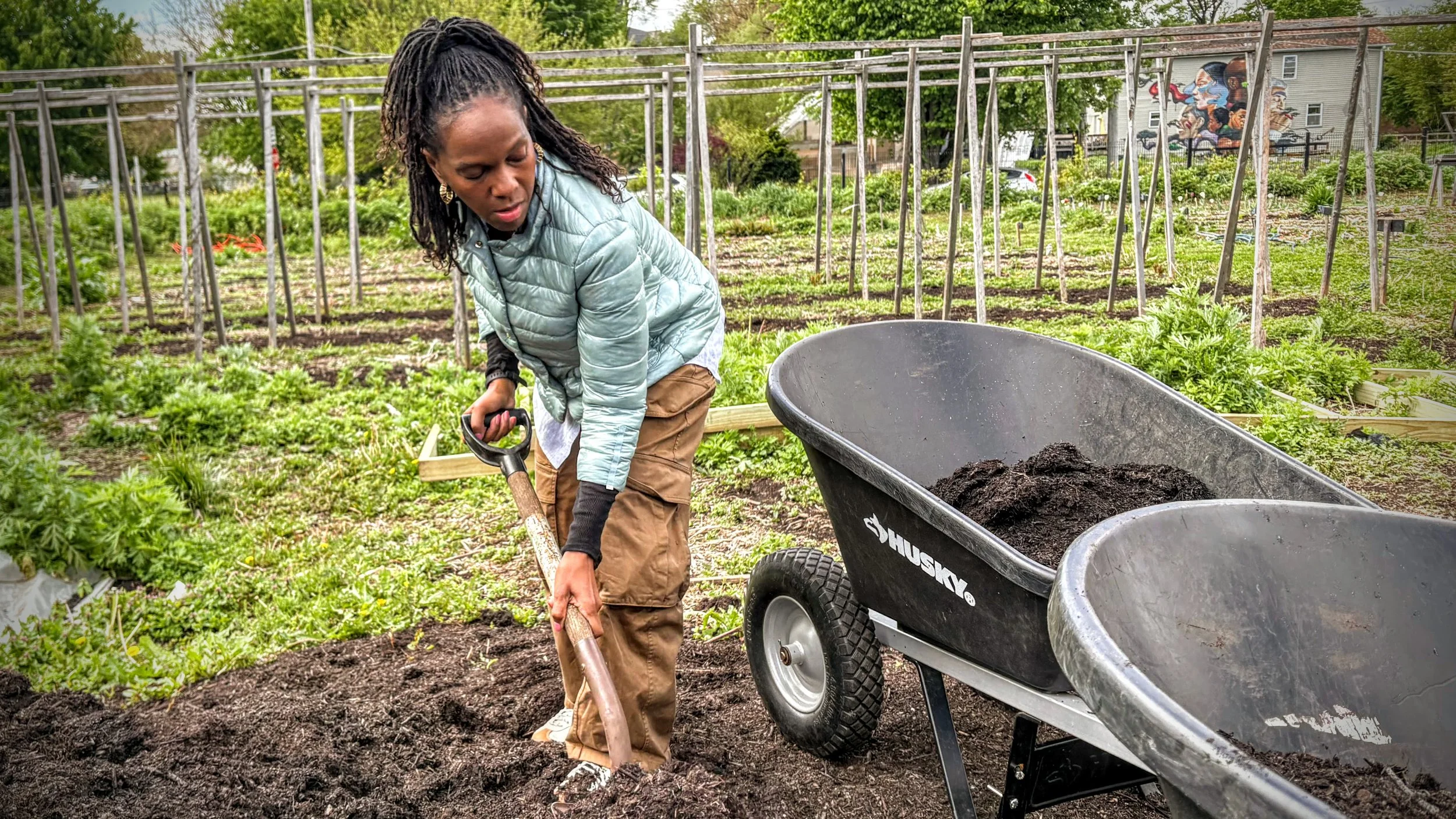
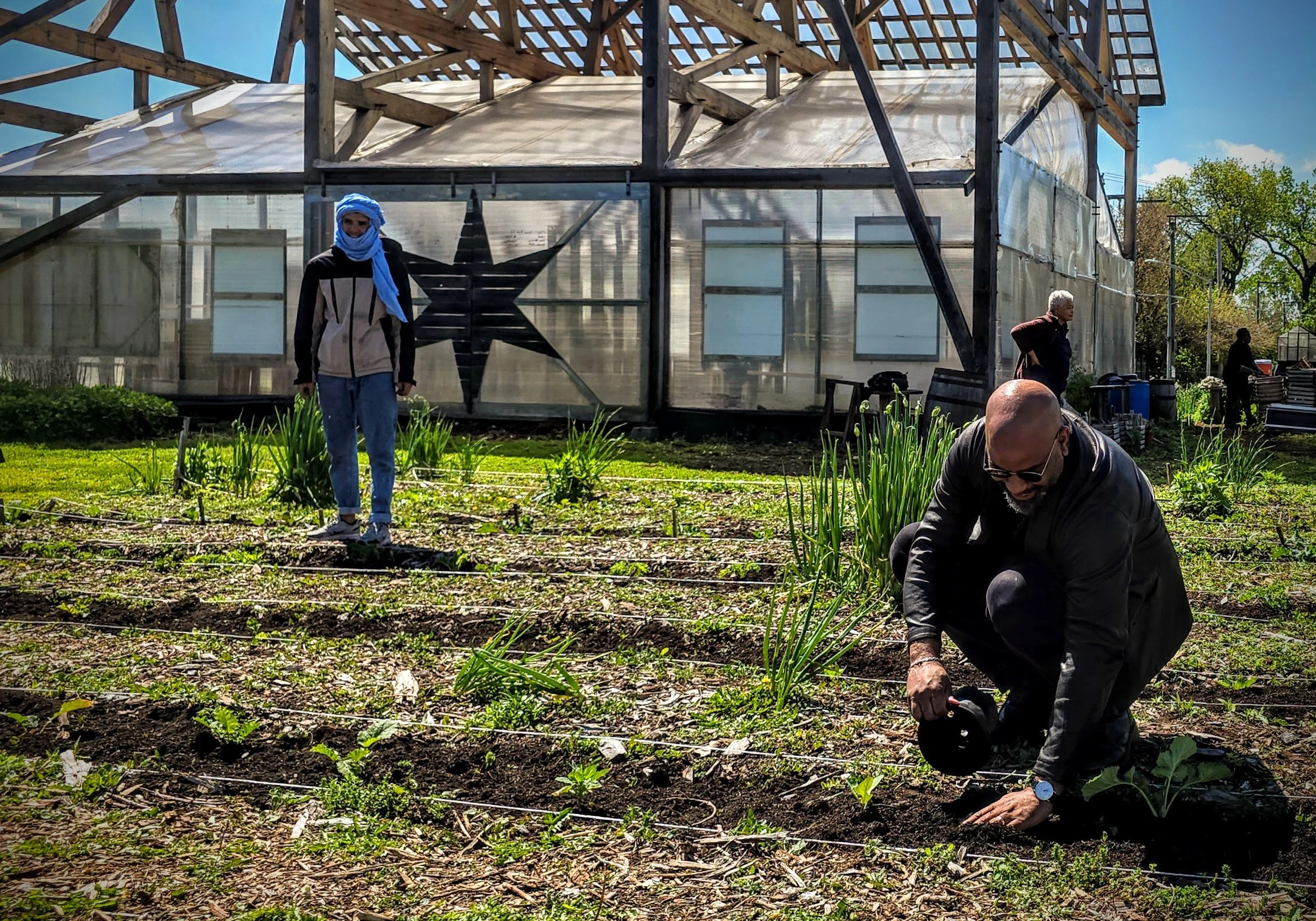
The 2026 Wellness Wednesday season launched on May 13 with a profound convergence, directly coinciding with the inaugural session of the “We the Publics…” Civic Arts Talk Series. This alignment transformed the day into a seamless, intergenerational flow where community ritual met critical dialogue. On this day, the true power of the Communiversity campus was on full display as scholars, artists, students, elders, children, and visitors laid hands on the soil side by side, amid a continuous, alternating current of physical labor, artistic expression, and deep intellectual unpacking.
The day began with the SWF team preparing to receive the collective, both the expected and the unexpected. Our practice dictates that all contributions carry equal weight: those physically able to support the labor of the land work alongside those whose contributions emerge through storytelling, recipe sharing, or prepping the harvest for the kitchen. As the first arrivals gathered, we “pair up,” intentionally matching individuals by shared lived experiences—or a lack thereof—to amplify the cross-pollination of techniques, skills, and wisdom.
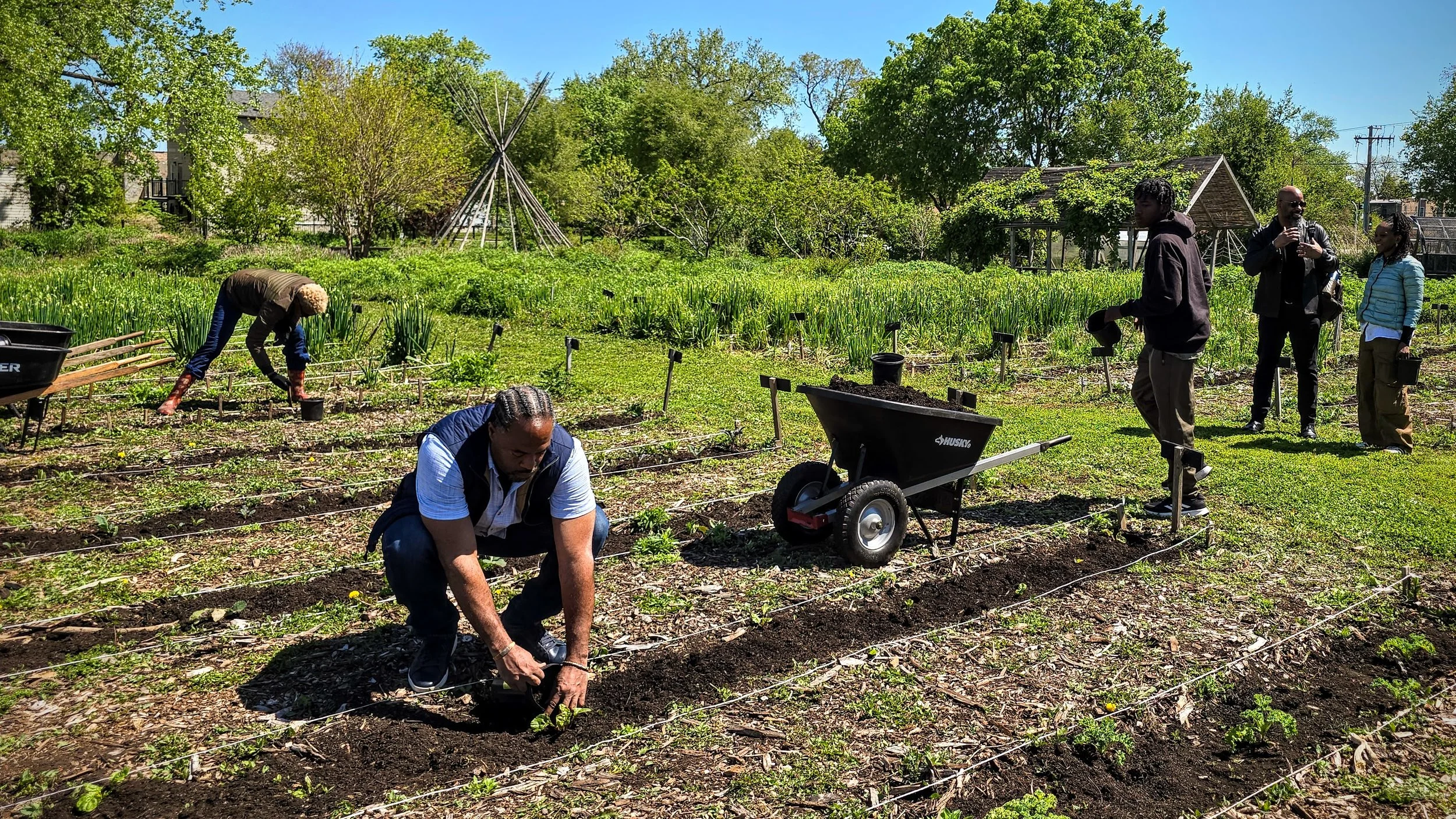
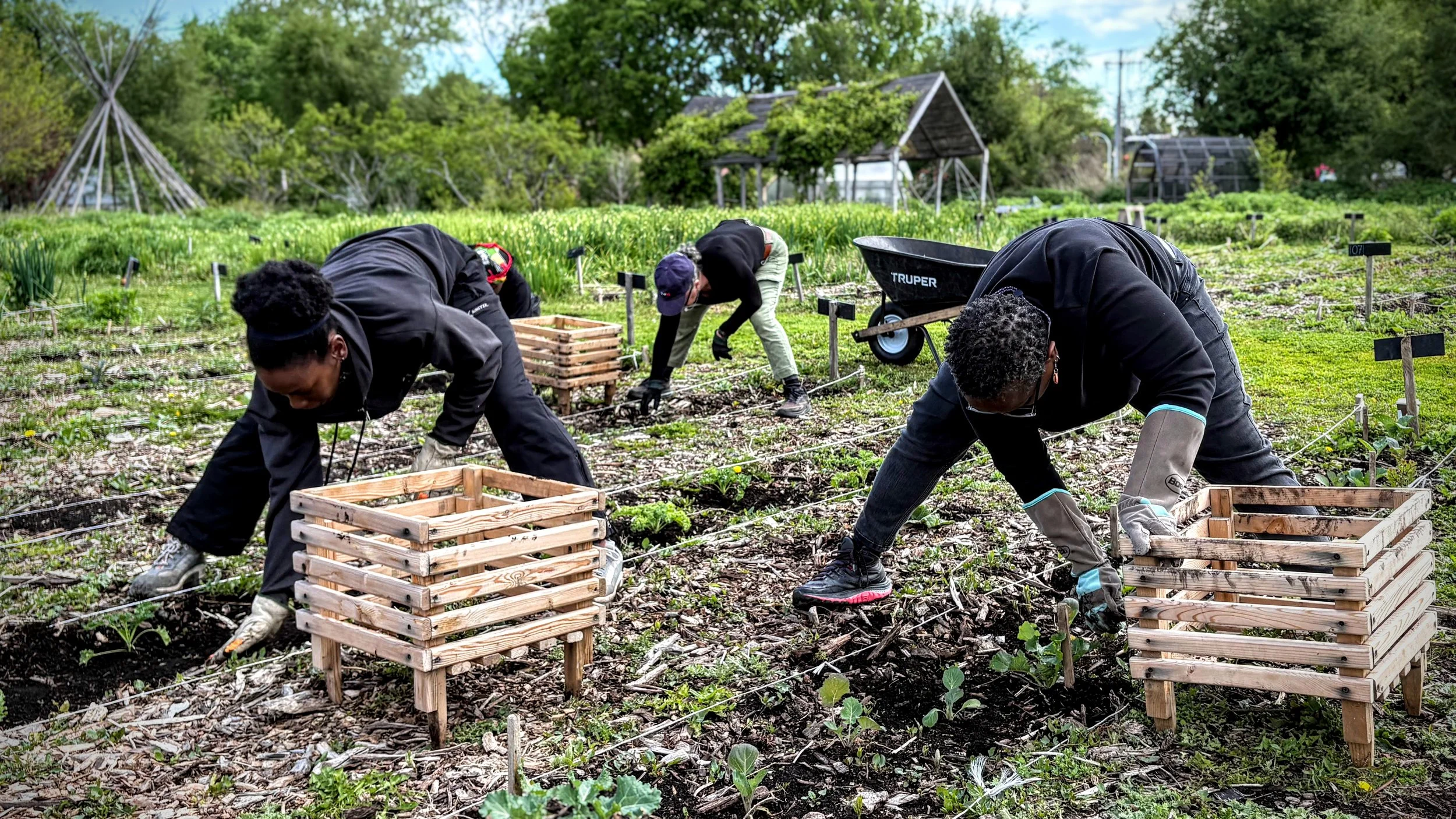
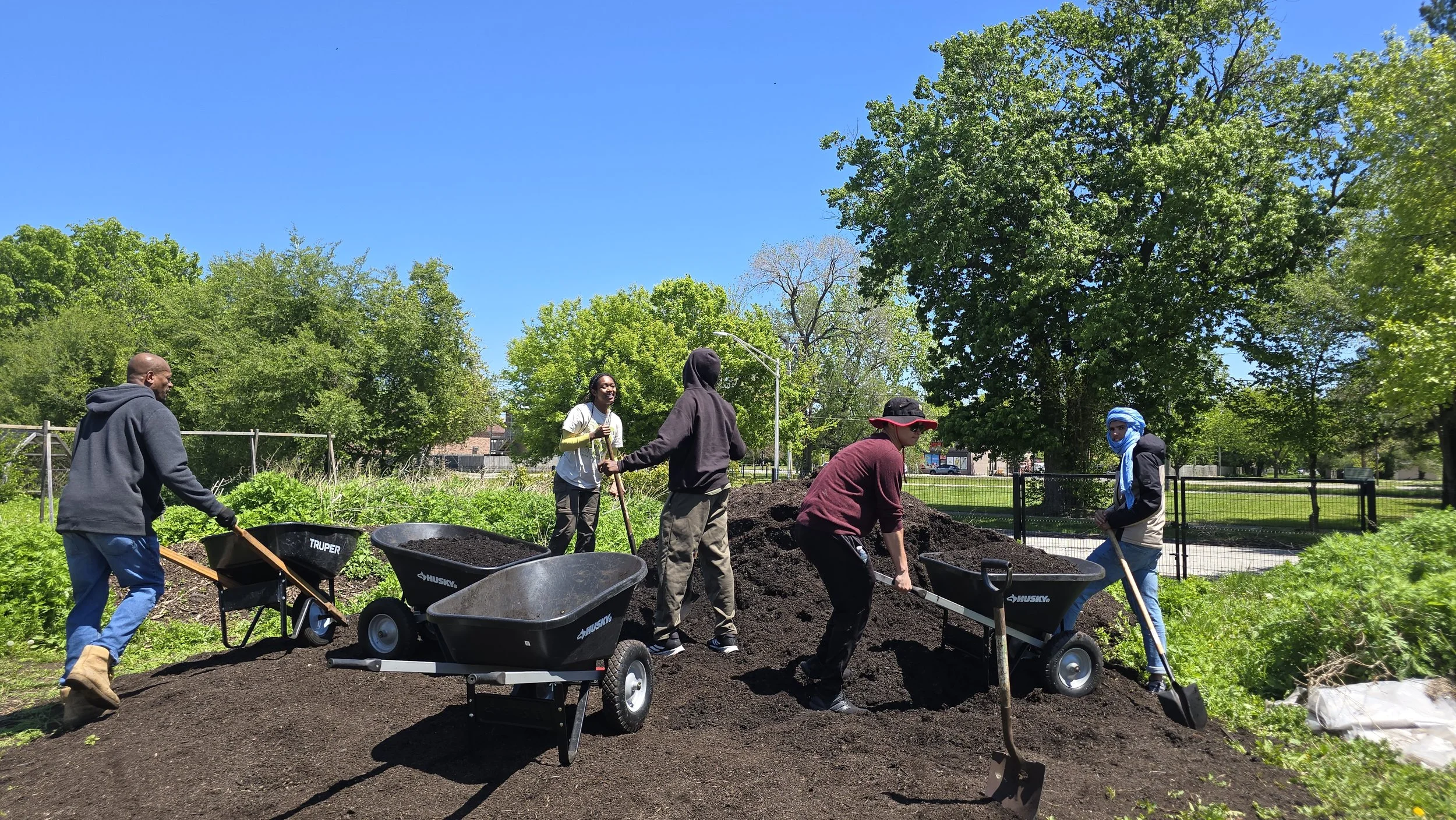
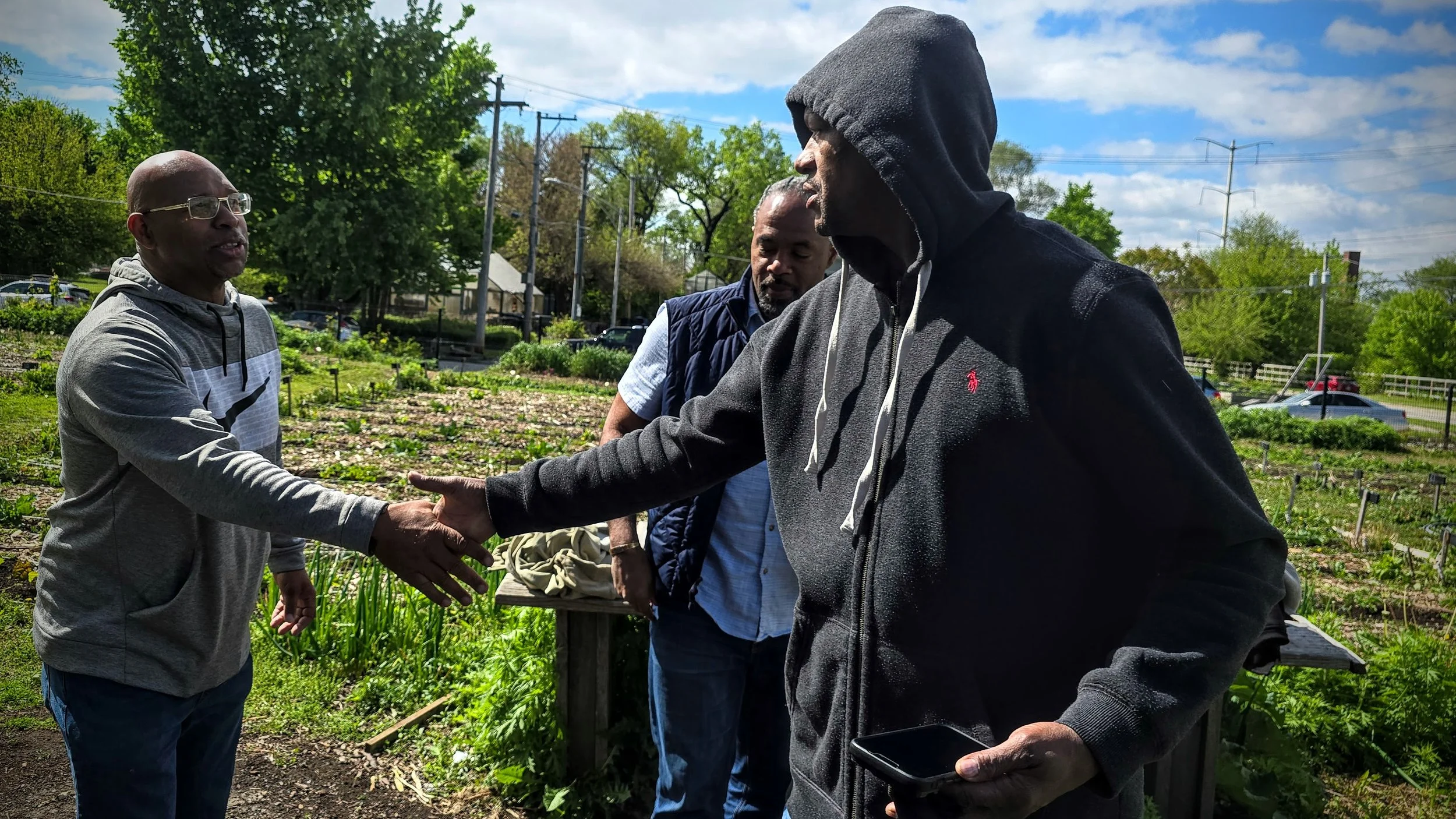
True to our embrace of chaord (the balance of chaos + order), the collective focus was dictated by the "next needed thing." An unexpected drop in temperature dictated our first major shift, moving our "circle up" inside the Hoop Houses. Surrounded by thousands of emerging seedlings, the trapped solar energy radiated a unique physical and conversational warmth. In this space, individuals were encouraged to share their names, gifts, and how they came to be at Wellness Wednesday. The practice of circling up ensures that no talent goes unnoticed and allows participants to see fragments of themselves in one another.
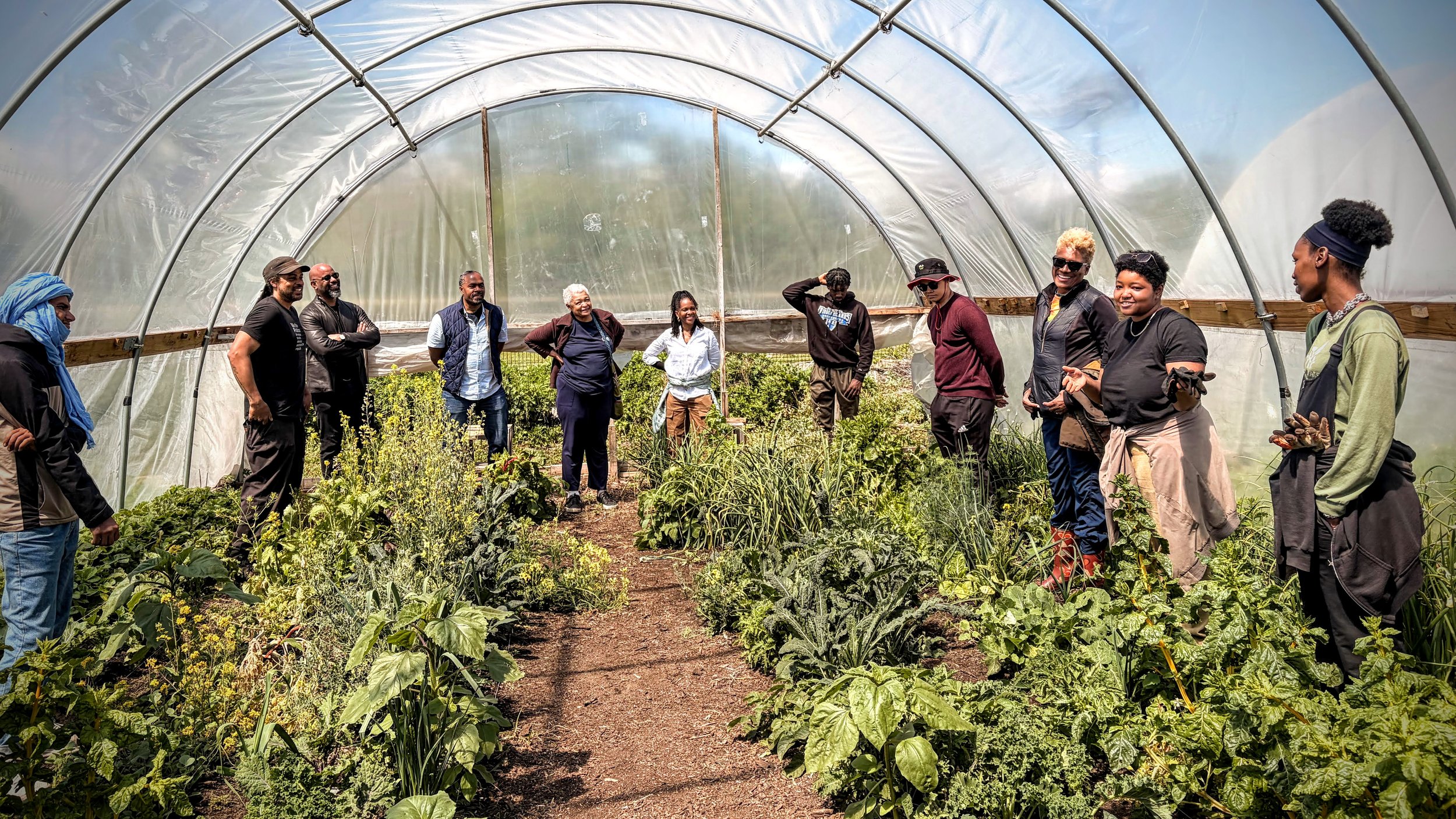
This environment also set the stage for the first segment of the "We the Publics..." series. It was here that Dr. Reuben Jonathan Miller initiated a profound dialogue on incarceration systems, institutional structures, and social welfare.
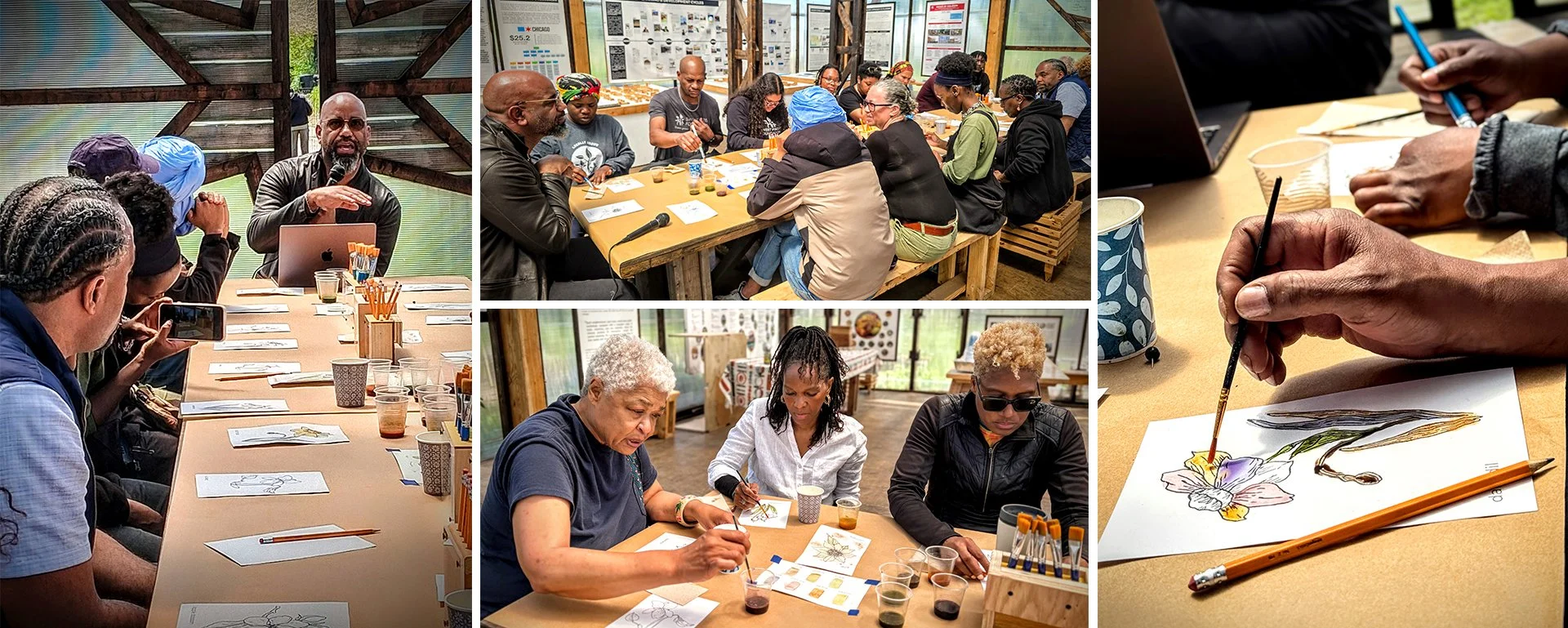
As the circle concluded, the work and the dialogue expanded in tandem. The community transitioned to the next needed tasks—laying wood chips in walking paths, weeding, and preparing the harvest for lunch—while Reuben’s talk culminated in the Thought Barn. There, Civic Arts took a physical, creative form: participants utilized natural paints in the creative legacy of George Washington Carver, rendering botanical prints that made the morning's agricultural and structural dialogues tangible.
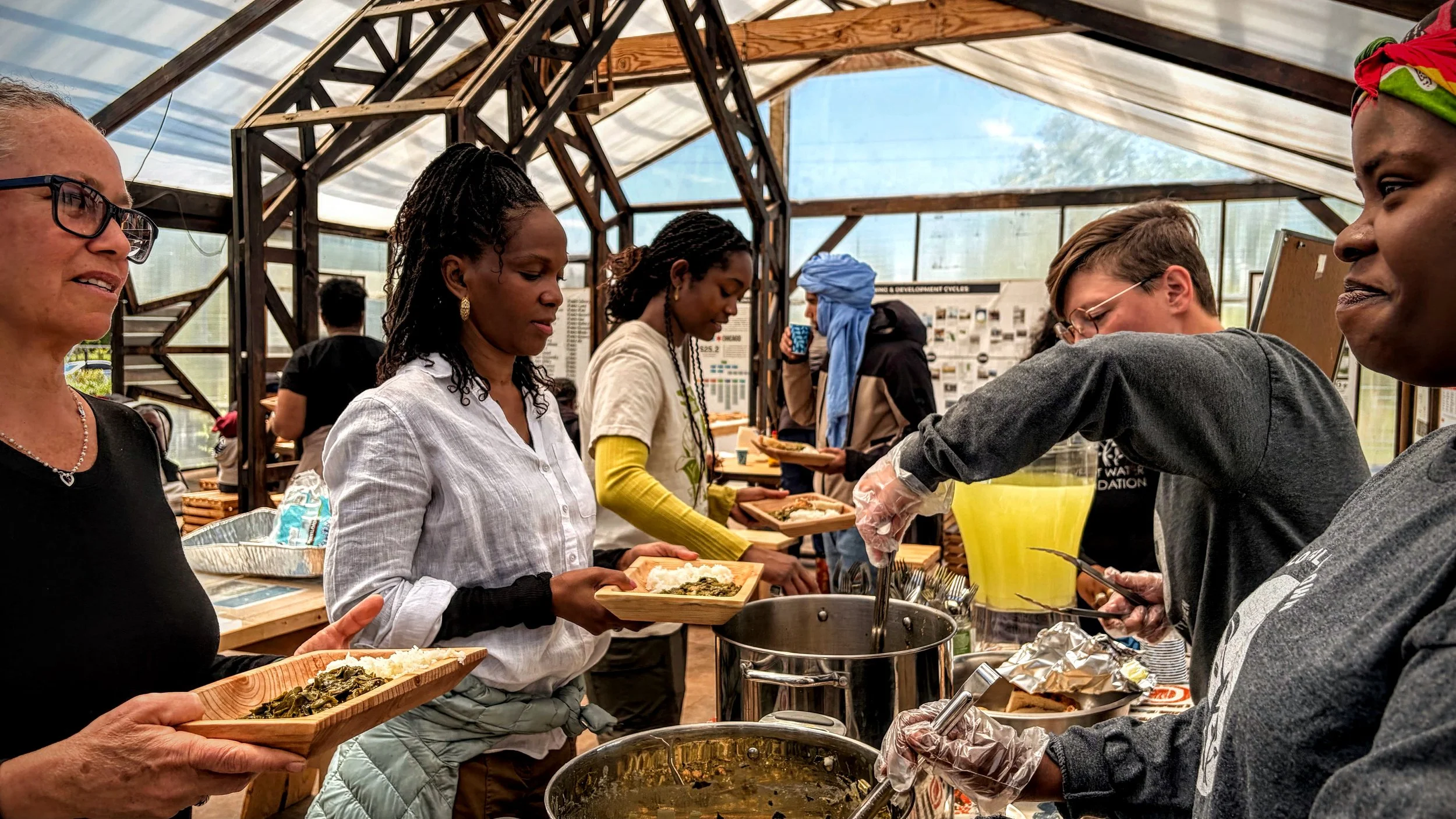
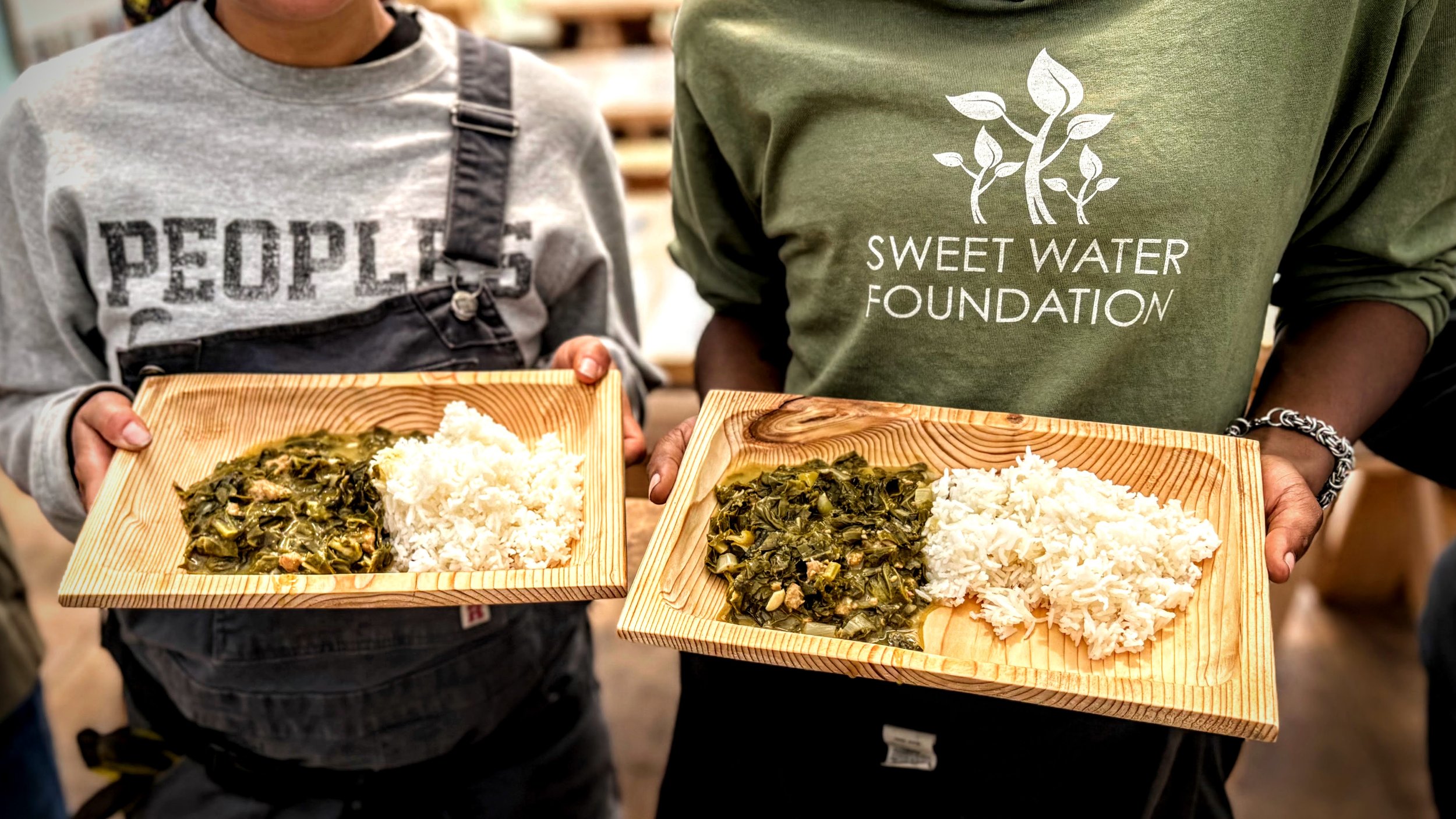
At midday, the collective convened to break bread, showing what can be created from the cultivation of shared labor. We enjoyed a farm-to-table meal of Gumbo Z’herbes and Smoky Black-Eyed Peas, featuring fresh collard greens, kale, onions, garlic, and dried black-eyed peas from the Community Farm, harvested just yards away. The performing arts commenced with Charles Pryor, accomplished jazz musician and Sweet Water Human-in-Residence, filling the air with live music and transforming lunch into a vibrant manifestation of the "good life"—earned entirely through the price of being, doing, engaging, and giving.
Inaugural “We the Publics…” Civic Arts Talk at Civic Arts Church
Following the nourishing meal, the afternoon procession moved to the Civic Arts Church for the second portion of the day’s program, featuring author, scholar, and MacArthur Fellow Dr. Imani Perry alongside artist and organizer Omo Moses.
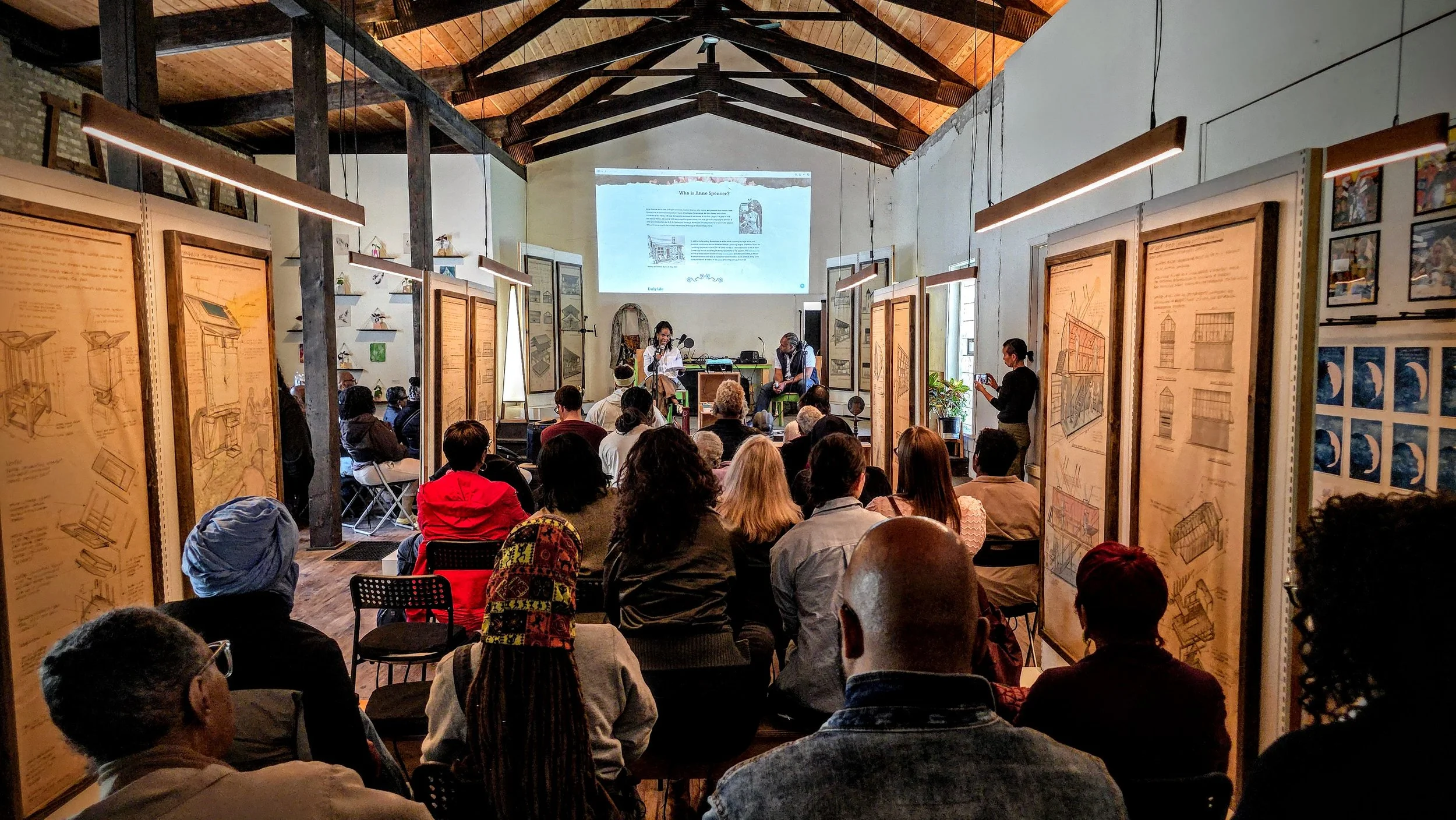
Dr. Perry initiated the dialogue by anchoring the gathering within the framework of Sankofa, paying profound homage to the enduring legacy of Sweet Water Foundation’s Board Member and Global Ambassador, Dr. Derise "Mama Afua" Tolliver, and to her own late aunt, Yvonne Perry Robinson. She framed both women as "poets of purpose" whose lives represented a tradition of labor that was fundamentally larger and freer than traditional societal categories; Yvonne Perry Robinson was an engineer and a poet, and Dr. Derise Tolliver was a psychologist, professor, and artist.
Dr. Perry used a circuitous historical narrative to unpack this tradition, tracing the intergenerational connections between two monumental yet relatively unknown figures in African American literature: Anne Spencer and Sterling Brown. Two individuals who hosted, cared for, taught, and provided sanctuary for historical giants – W. E. B. Du Bois, James Weldon Johnson, and Martin Luther King Jr. at Anne Spencer’s oasis and Zora Neale Hurston, Langston Hughes, James Baldwin, Toni Morrison, Stokely Carmichael, and Lucille Clifton at Sterling Brown’s.
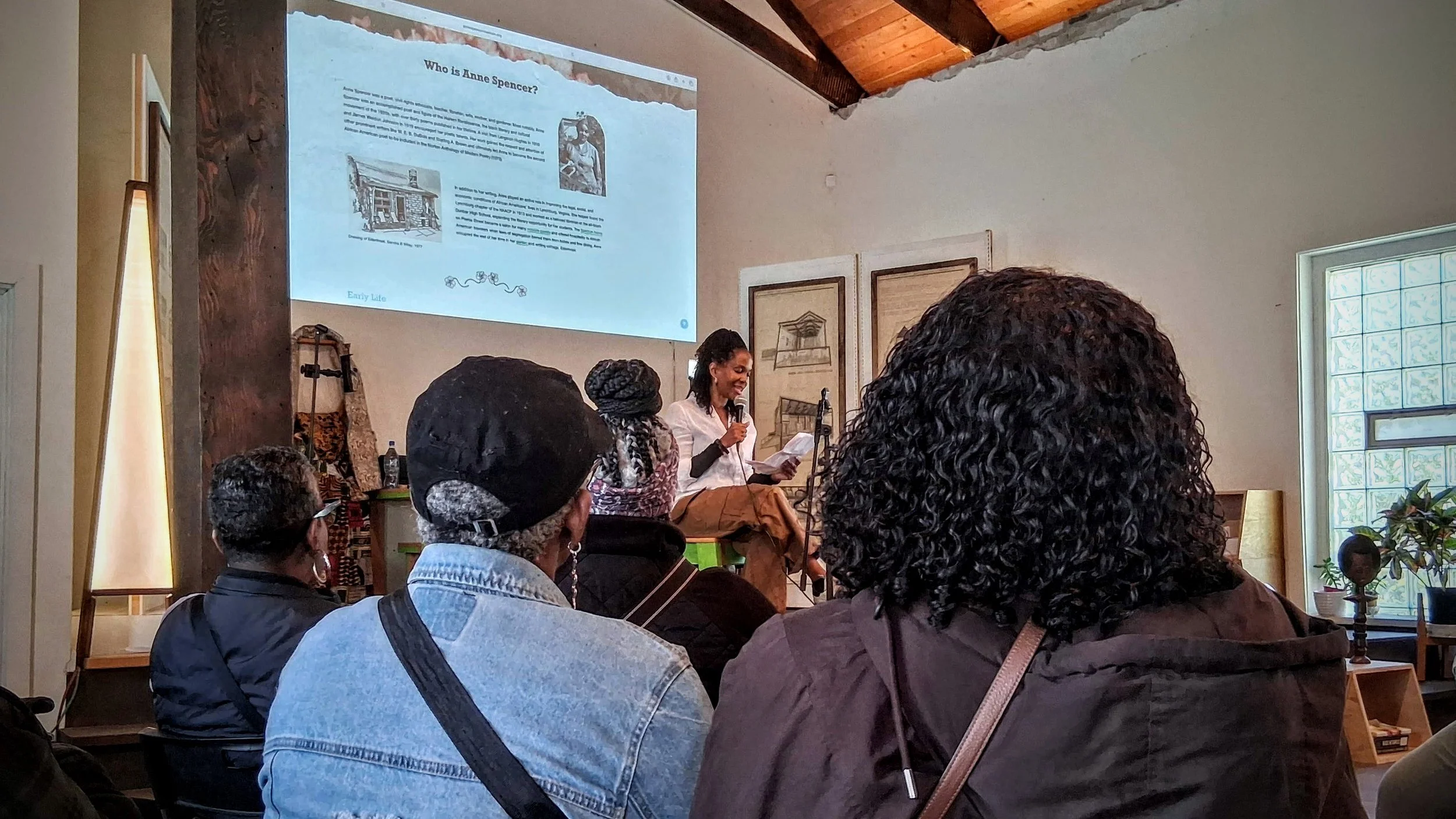
Anne Spencer was born in 1882 to formerly enslaved parents. She was a fierce activist, librarian, and Harlem Renaissance poet who spent her entire life rooted in Lynchburg, Virginia. In the 1920s, a twenty-something Sterling Brown arrived in Lynchburg for his first teaching assignment, entering the protective orbit of Spencer's home and the garden sanctuary. In an era dominated by Jim Crow segregation and state-sanctioned violence, Spencer’s garden operated as a literal, life-giving oasis. Dr. Perry shared that for Spencer, “to work the land became a pathway for her to open up her intellect and organize her imagination.” The place that embodied “how the beauty of nature and the beauty of life and the value of community could not be separated from one another.” Her home and garden became a place of “historic purpose,” serving as a model for what Sterling Brown’s basement would become for generations of students in Washington, D.C., years later, during his time as a legendary professor at Howard University. Dr. Perry shared Brown’s 1931 poem, To a Certain Lady in Her Garden, paying homage to the influence of the space of collective refuge Spencer so carefully tended.
Dr. Perry eloquently connected the dots of these historical giants, bringing to light the story of “what it meant for him [Brown] to witness her growing something beautiful in the thicket of a despairing world.” She shared this narrative to remind the audience, in this present tumultuous and uncertain time, of the vital necessity of spaces like The Common|Wealth and rituals like Wellness Wednesday. Perry shared that just as Anne Spencer’s garden became a model for Sterling Brown, she argued, it should serve as a model for us all. Coming to understand this connection, Perry noted, “is so much of what I get from being here,” at Sweet Water Foundation.
“[The Common|Wealth is] a space that cross borders…with a tradition of tending and care and cultivation that is critical as we stand in as the storms are swelling outside or even at our front door.”
Perry went on to speak directly to the active cultivation occurring on Sweet Water’s campus in relation to this tradition of tending and care. She referred to The Common|Wealth as a “space that cross borders…with a tradition of tending and care and cultivation” that is critical as we “stand in as the storms are swelling outside or even at our front door.” Reflecting on her work in African American Studies, Dr. Perry spoke of the necessary attention spent on the history of injustice, but also urged the audience to “expend at least as much energy and attention on the tradition of sustaining the tradition of creating beauty despite devastation, despite injustice.”
Perry concluded by sharing her eagerness to get her friend, Omo Moses, to The Common|Wealth because “as people who are inheritors of the tradition of freedom dreaming,…[our] role in the present moment...is carrying on of traditions of the very best of us and weeding through the past to bring [forth] stories of the useful past in order to bring us to a meaningful present and future.” She closed emphasizing that “working with the land...reminds us...that the slow,…deliberate work is often the work that matters most.”
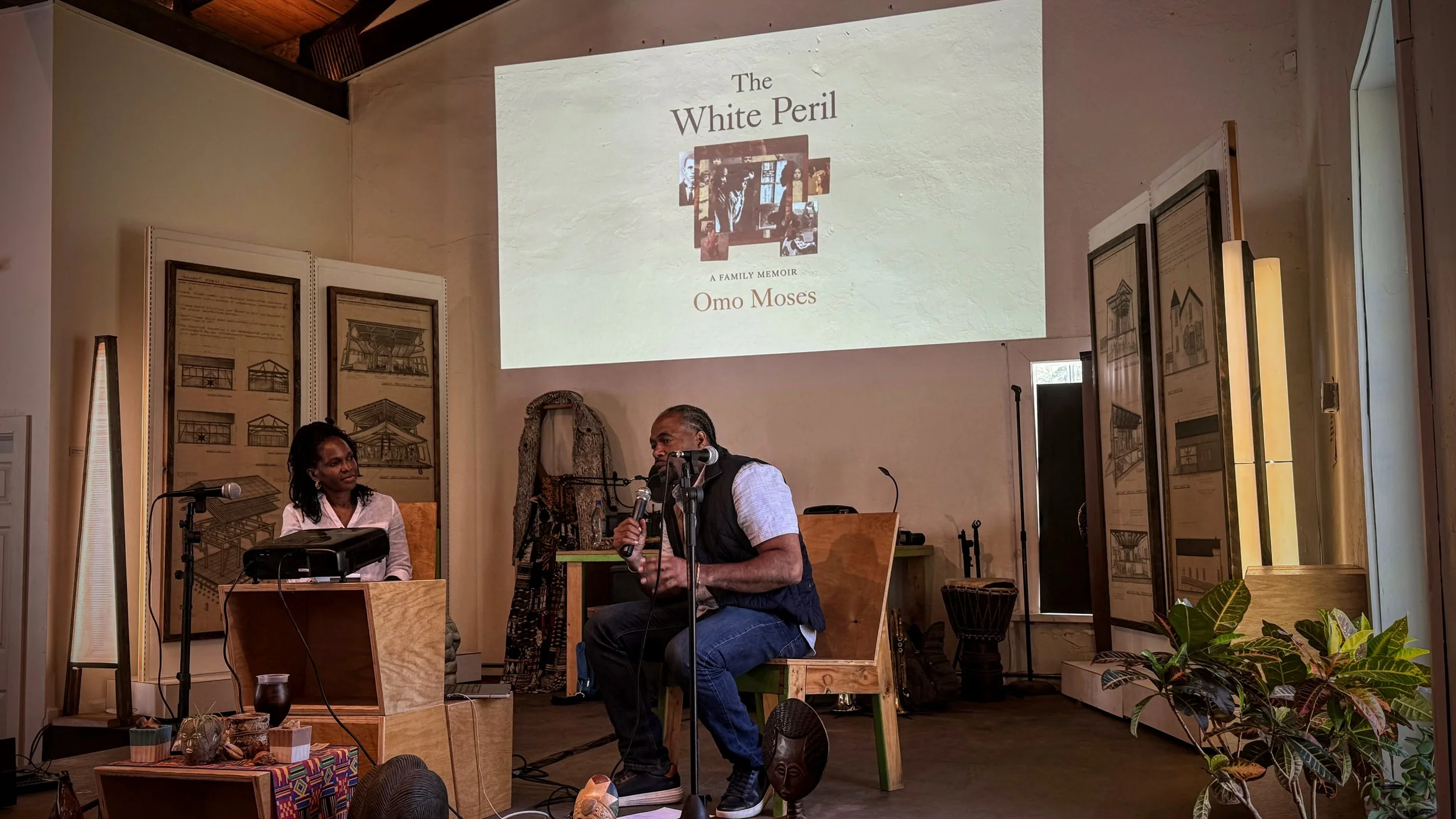
Omo Moses continued the Civic Arts Talk, reflecting on The White Peril, a book exploring his family’s multi-generational journey of resistance and sharing a cinematic, animated rendition of the book’s chapter titled “The Wild.” The short film captured the essence of a strip of woods along the Charles River in Massachusetts, where he and his siblings sought refuge as children despite the perilous, “life-taking” realities of a landscape built upon the forced removal of Indigenous peoples. He reflected on the pivotal moment when he first witnessed his father, the legendary educator and civil rights organizer Bob Moses, in contained, quiet rage against the perils of white America.
Moses’s talk mapped out the century-long lineage of writers and organizers who navigated these structural perils. From the historical text of his great-grandfather in 1919, William H. Moses’ The White Peril, to his father’s organizing work during the 1964 Freedom Summer in Mississippi. Similar to Dr. Perry, Moses “weeded” through history to unearth a highly useful past. He revealed that an essential emotional anchor that kept civil rights leaders sane while operating under the constant threat of state-sanctioned apartheid was their direct contact with rural farms and Black landowners like Amzie Moore and E.W. Steptoe. These places provided the literal, material base where young organizers were sheltered, nourished, and sustained.
“[The Common|Wealth] is an alternative space that is presenting a different possibility for myself as a human being and for the community,...like E.W. Steptoe and Amzie Moore that created those similar spaces in the 60s.”
As he concluded his talk, Moses directly aligned the historic sanctuary of the Mississippi Freedom Houses with Sweet Water Foundation’s Common|Wealth campus, stating, “I'm in a space that is an alternative space that is presenting a different possibility for myself as a human being and for the community,...like E.W. Steptoe and Amzie Moore that created those similar spaces in the 60s.” He emphasized how working with the land is a slow, deliberate, and necessary reclamation of the past – a direct continuation of a lineage that brings balance and alternative possibilities to communities of resistance.
Reclaiming Community Wellness through Sankofa
As Dr. Perry shared the history of poet Anne Spencer’s garden sanctuary, and Omo brought his family narrative to life, the space transformed into a site of collective remembrance, cultural resilience, and true community wellness.
We learned about the poet and gardener Anne Spencer, whose garden sanctuary served as a crucial space for peace and radical imagination among Harlem Renaissance intellectuals. We absorbed a reflection on the structural legwork of the freedom struggles across generations of the Moses family. Through these narratives, shared so eloquently, the spirit of Wellness Wednesday was revealed not as an isolated experiment, but as a direct continuation of a long line of "gardens of possibility."
Through the lens of Sankofa, we came to understand that the spaces we build today are sustained by the giants on whose shoulders we stand—not just the historic names in textbooks, but the Mamas, Babas, Aunties, and educators who kept communities well through generations. In the shadow of the loss of Mama Afua, who embodied the very essence of Sankofa, this Wellness Wednesday proved that our work is a continuous, resilient cycle of life, memory, and radical becoming.